Street interviews look simple on a phone screen: one person, one question, one honest answer. Getting there on a London pavement is less simple. You have about ten seconds to win someone's attention, buses and sirens in the background, a frame that has to work in 9:16, and a legal question about putting a stranger online that most creators skip.
We rent iPhone 18 kits for vox pops most weeks, and the same handful of decisions decides whether people come back with usable content. This guide covers the kit we recommend, how to set it up solo or as two people, how to get consent properly and how to keep the audio clean when the street is loud.
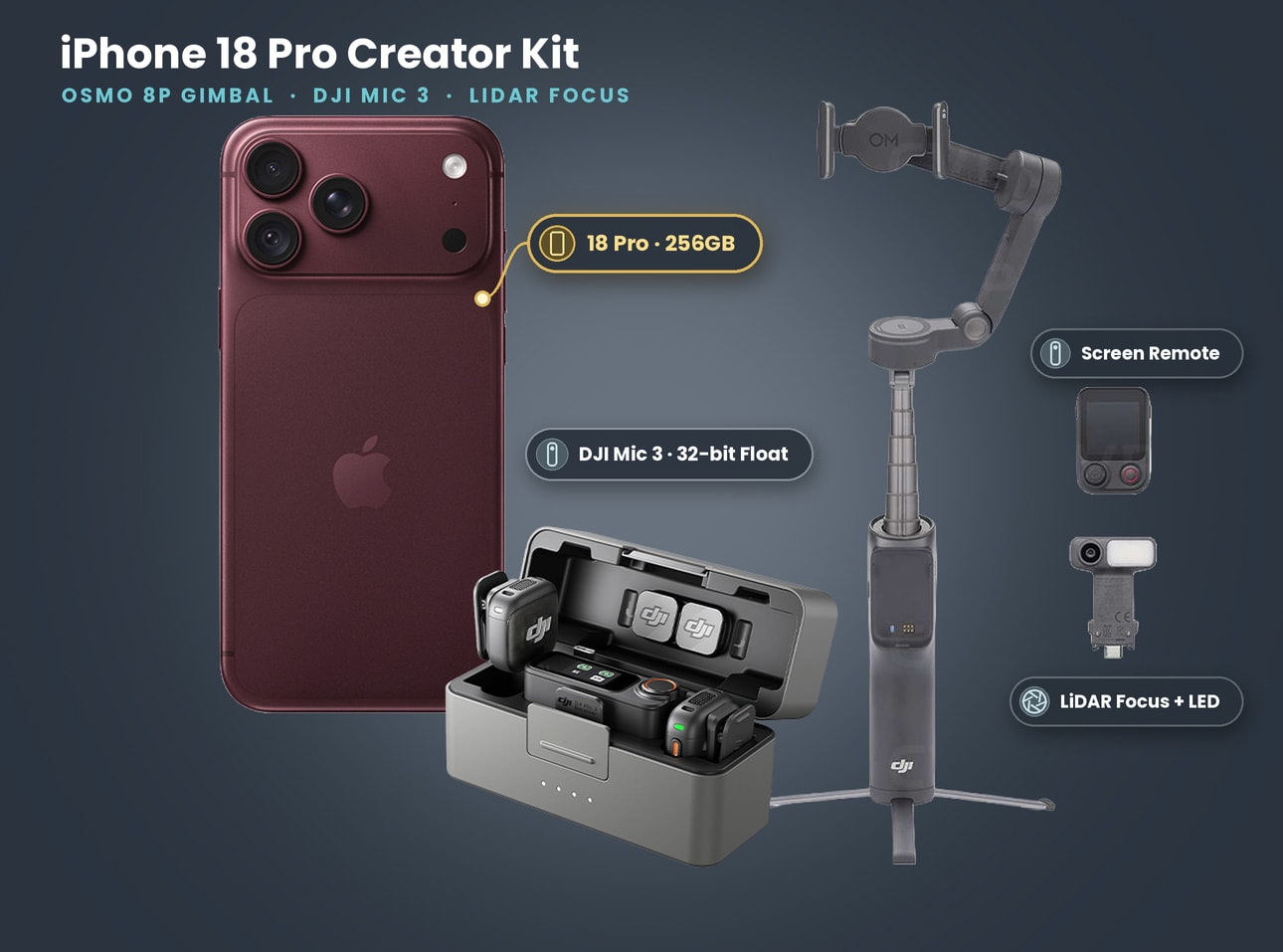
- The core street interview kit for iPhone: an iPhone 18 Pro, the DJI Gimbal Osmo 8P and two DJI Mic 3 transmitters on handheld handles, with internal 32-bit float recording on.
- Solo shooters: phone on the gimbal, mic in the other hand. Two people: one asks, one films, and you can add a second angle.
- Get spoken consent on camera and a signed release for commercial use. Faces in your footage are personal data under UK GDPR.
- Small handheld crews on public pavements face fewer barriers than crews with tripods and lights, but check the Film London code of practice and ask TfL before filming on roads or TfL property.
- The iPhone 18 Pro creator kit was £100 a day on 27 October 2026, no deposit.
In this guide
- What goes in a street interview kit for iPhone
- Solo or two-person: two setups that work
- Getting consent and staying on the right side of the rules
- Clean audio on a loud street
- Framing street interviews for 9:16
- Power, storage and the end-of-day routine
- Street interview checklist
- Renting the street interview kit in London
What goes in a street interview kit for iPhone
A street kit has to be fast to set up, light enough to carry for hours and small enough not to draw a crowd before you are ready. Here is what we put in the bag and why.
| Item | Why it matters | Our pick |
|---|---|---|
| Phone | Image quality, battery, low light at dusk | iPhone 18 Pro 256GB (211 g) |
| Stabiliser | Steady walk-and-talks, quick reframes | DJI Gimbal Osmo 8P |
| Mics | Clean voice over traffic | DJI Mic 3, two transmitters |
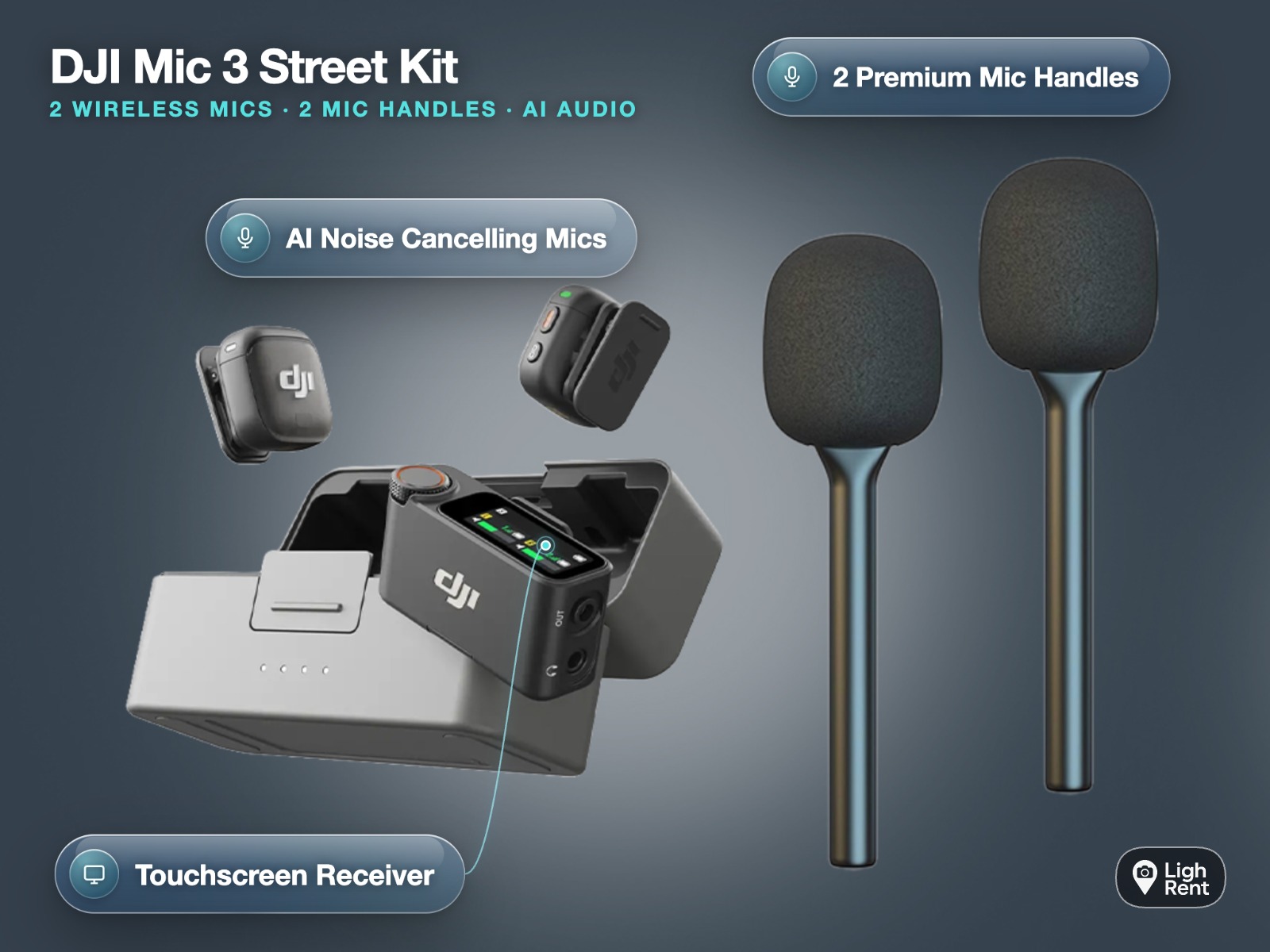
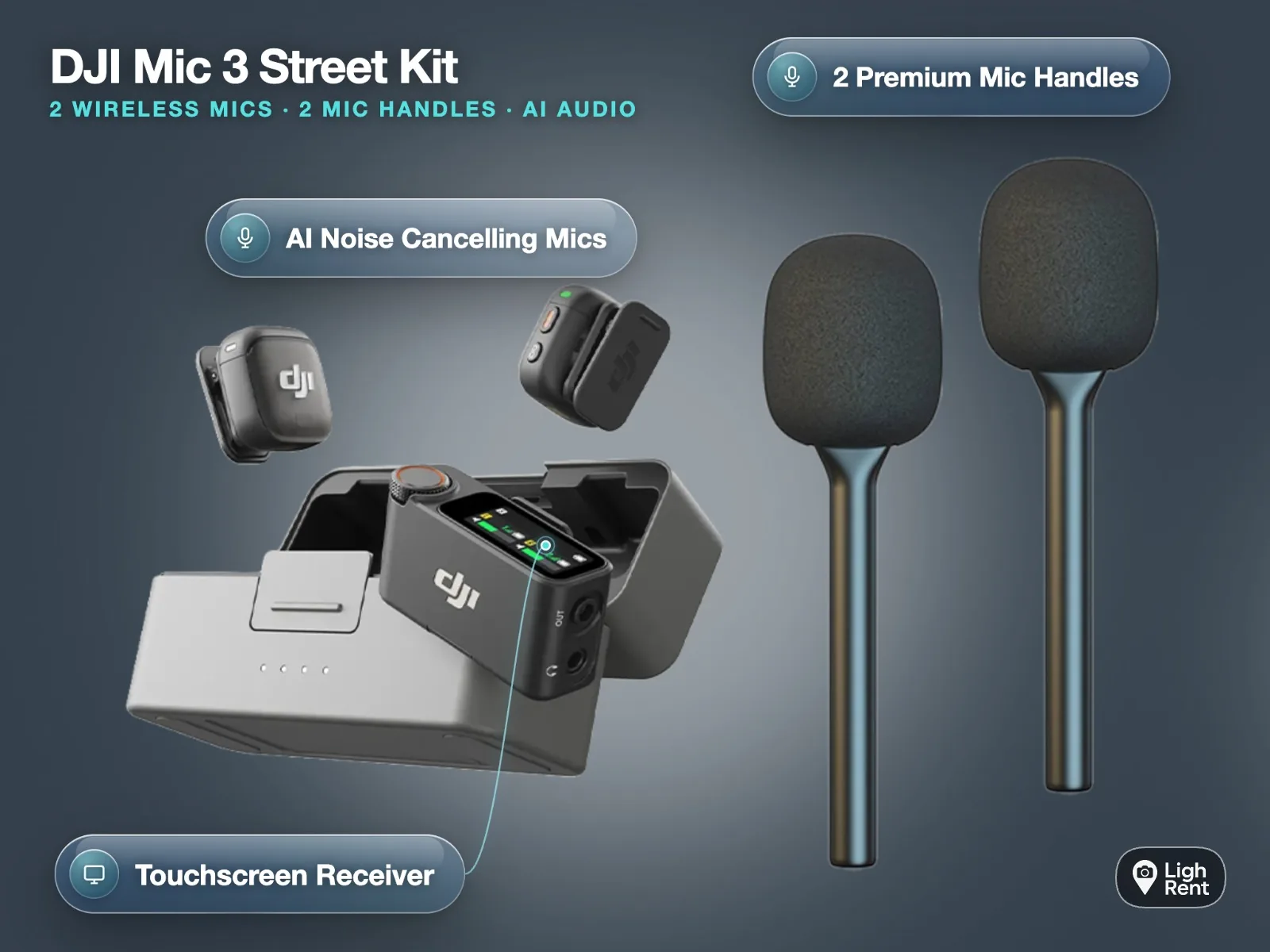
| Mic handles | Hand the mic to strangers in seconds | Street kit handles with foam |
| Windshields | London wind and bus slipstream | Furry windshields on every outdoor take |
| Power | Phones drain fast on cold days | 45W pocket power bank |
| Paperwork | Consent and releases | Printed release forms plus a QR code |
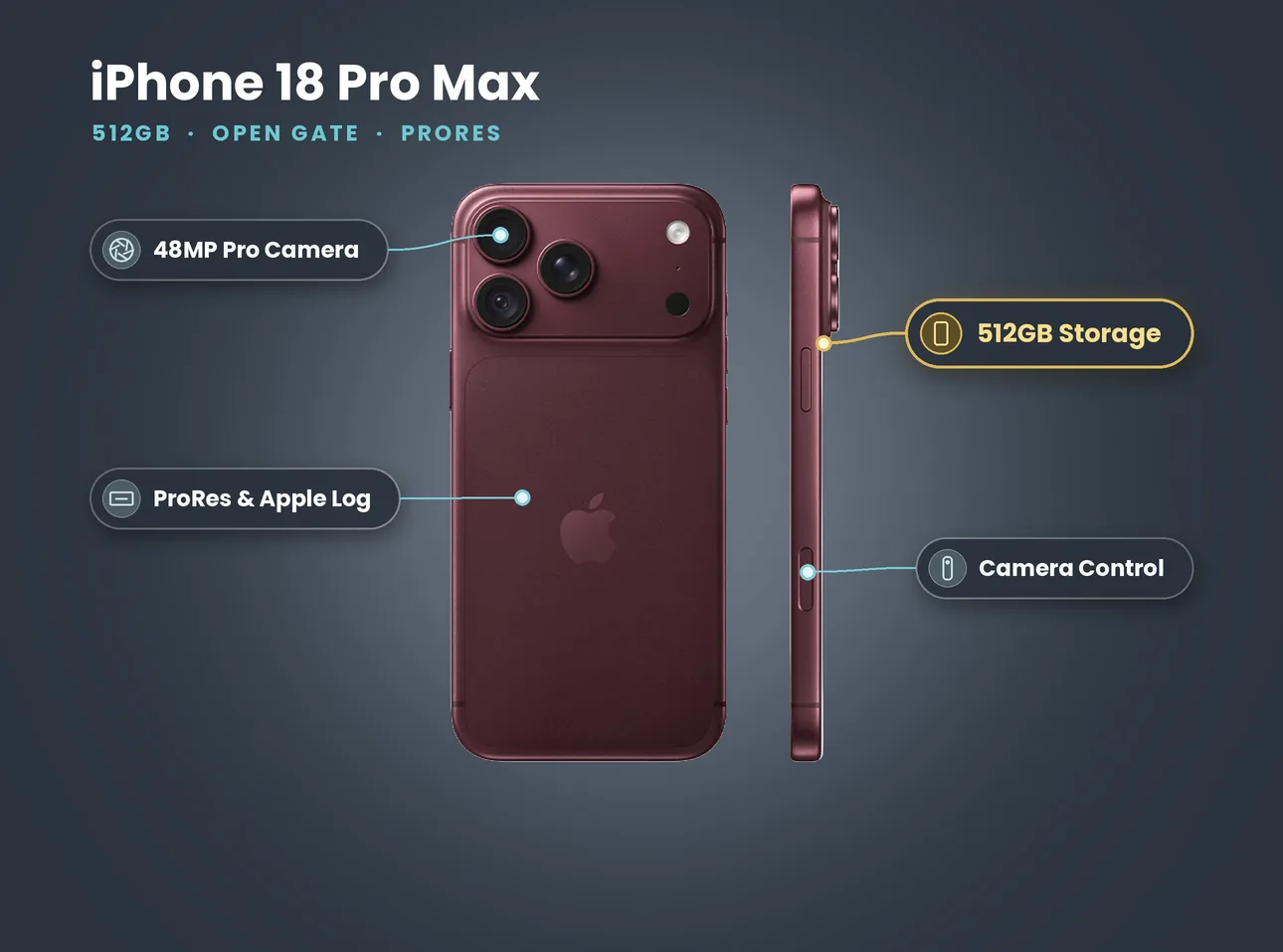
Why the Pro rather than the Pro Max? For street work we usually prefer the smaller phone. Apple lists the iPhone 18 Pro at 211 g against 249 g for the Pro Max, and both have the same 48MP camera system, according to Apple's tech specs. Those 38 grams matter on a gimbal held at arm's length for four hours. The Pro Max earns its place when you want the bigger screen to judge framing or the longer battery, which Apple lists at up to 43 hours of video playback against 34.
What's in the kit: iPhone 18 Pro 256GB + DJI Gimbal Osmo 8P + DJI Mic 3
- iPhone 18 Pro 256GB
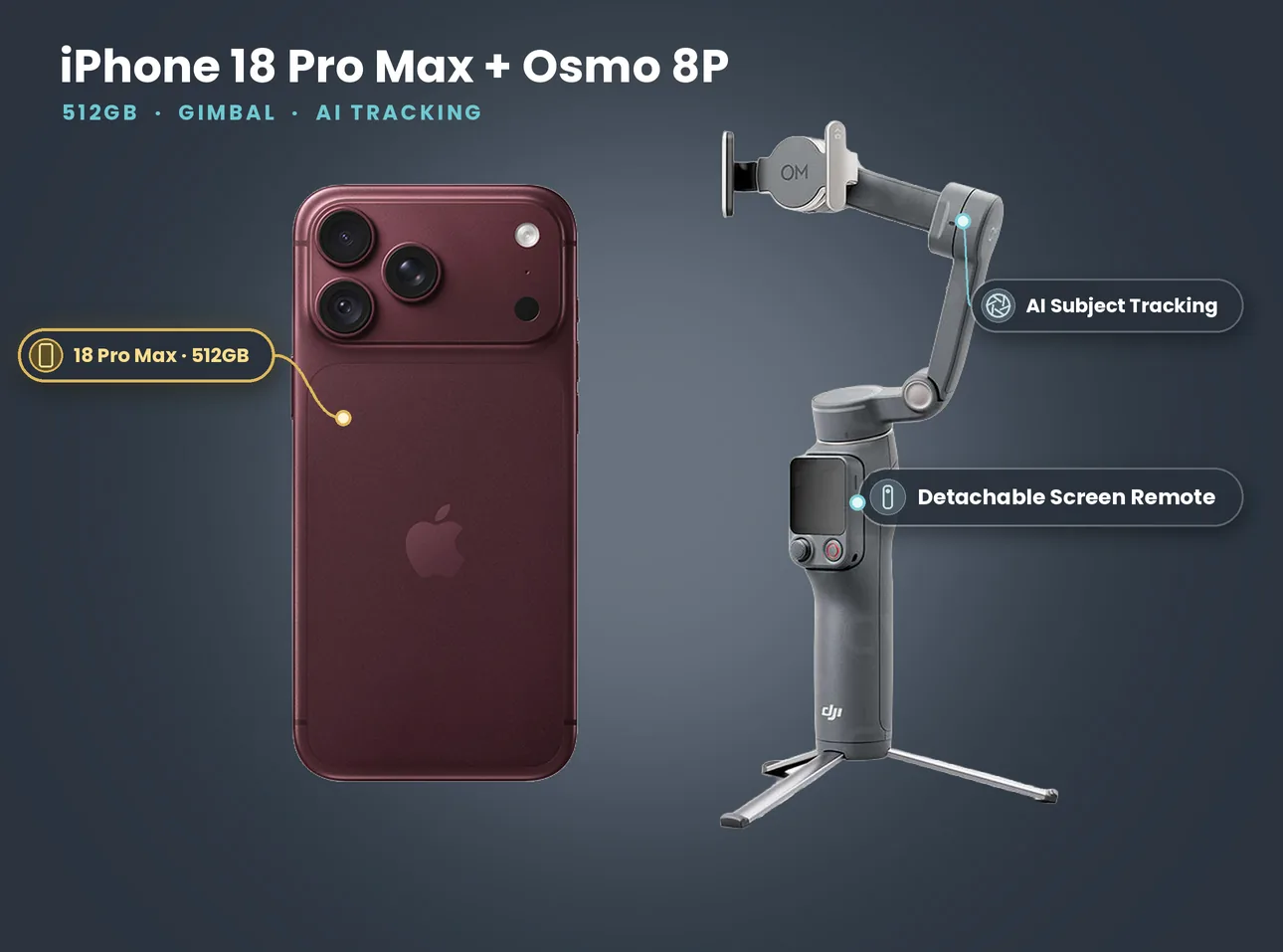
- DJI Gimbal Osmo 8P with built-in extension rod and tripod, FrameTap screen remote
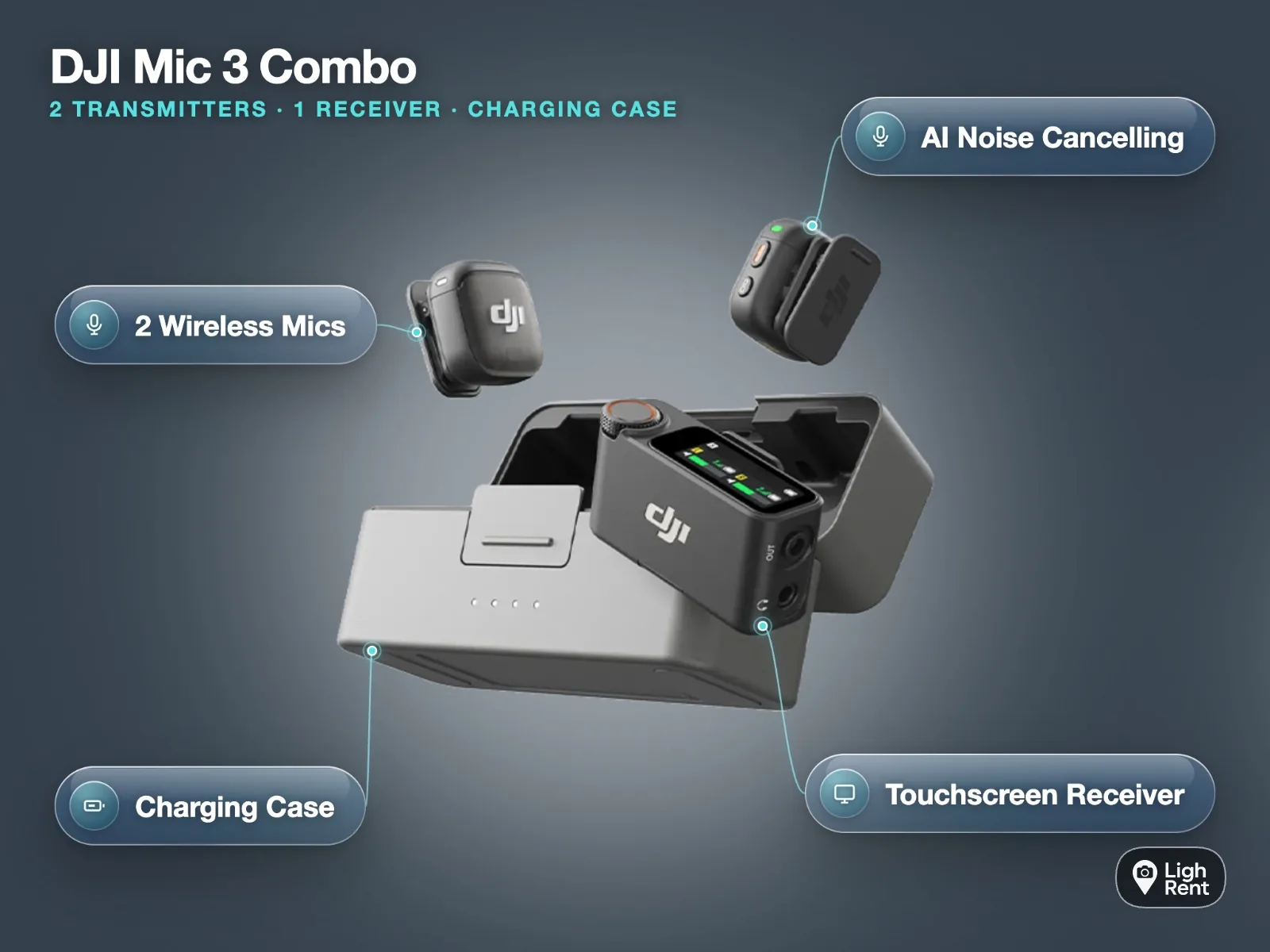
- DJI Mic 3 set: two transmitters, one receiver, charging case, 32-bit float internal recording
Price on 27 October 2026: £100 a day, £280 for 3 days, £628 for 7 days. No deposit. Add the DJI Mic 3 Street Interview Kit with two mic handles (£25 a day, £140 for 7 days) for handheld vox pops. Collect from Soho, Bethnal Green or Finsbury Park.
Solo or two-person: two setups that work
Solo: phone on the gimbal, mic in your hand
This is the classic creator vox pop. The iPhone sits on the DJI Gimbal Osmo 8P in your left hand, the mic handle in your right. You hold the mic towards the person, ask, and keep the phone pointed at them while you listen.
- Clip the Mic 3 receiver to the iPhone's USB-C so the phone records the live audio with the picture.
- Keep internal 32-bit float recording on in the transmitter. If the receiver loses signal because someone steps between you, the transmitter still has the take.
- Use a second transmitter clipped to your own collar if you want your questions recorded cleanly too.
- Detach the FrameTap remote if you want to hold the gimbal lower. DJI describes its 1.4-inch screen as mirroring the phone's view, so you can check framing without turning the phone round. Details are on the DJI Osmo Mobile 8P page.
The weak point of solo shooting is eye contact. Your guest will look at you, not the lens, which is usually what you want for vox pops. Stand so your face is just beside the lens and their eyeline lands close to camera.
Two people: an interviewer and a camera operator
With two of you, one person asks and holds the mic, and the other films. This is faster with strangers, because the interviewer can focus on the person while the operator handles framing, focus and the background.
- The interviewer holds the handheld mic. The operator wears nothing.
- The operator frames slightly over the interviewer's shoulder, so the guest's eyeline is just off the lens.
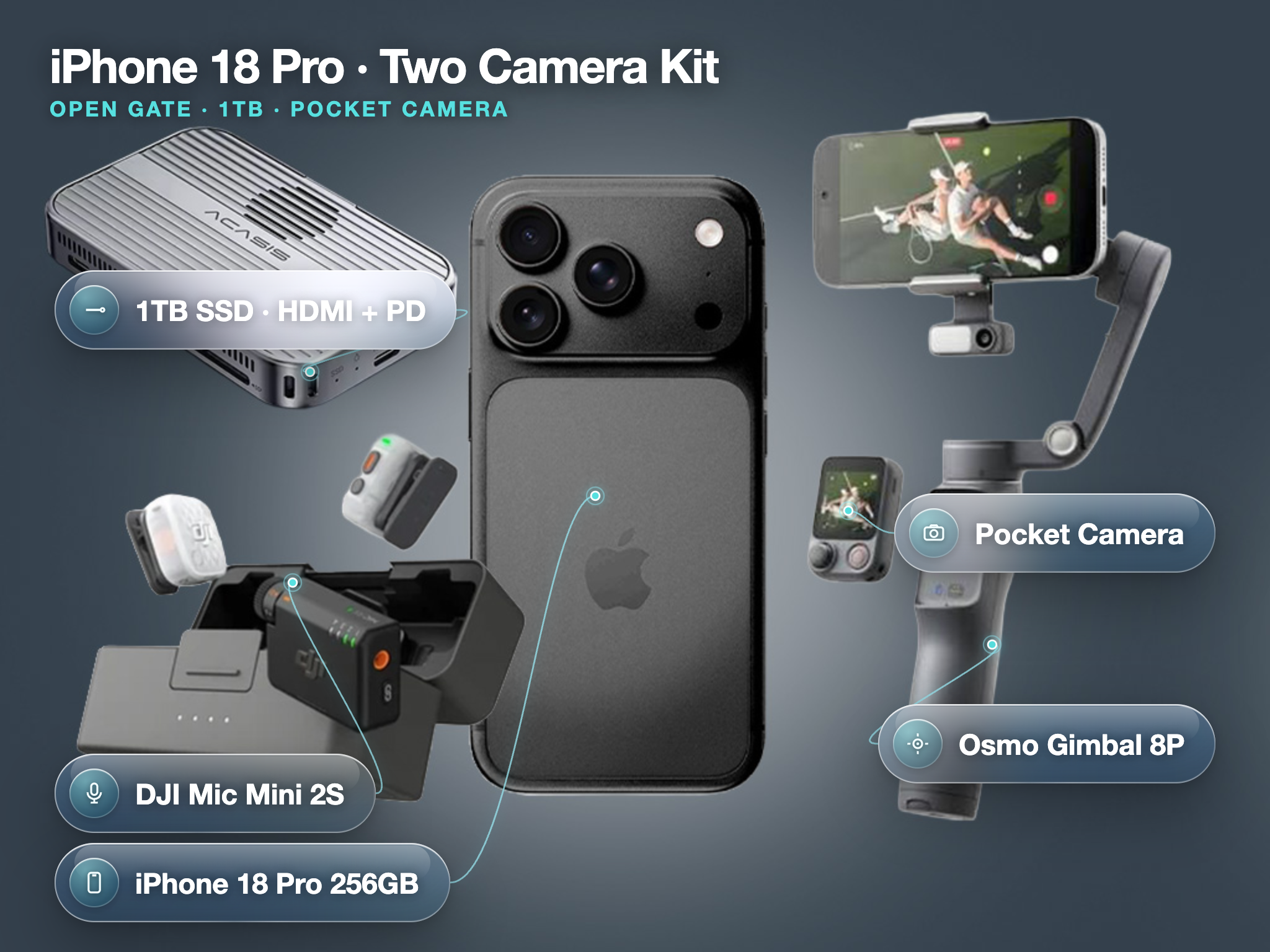
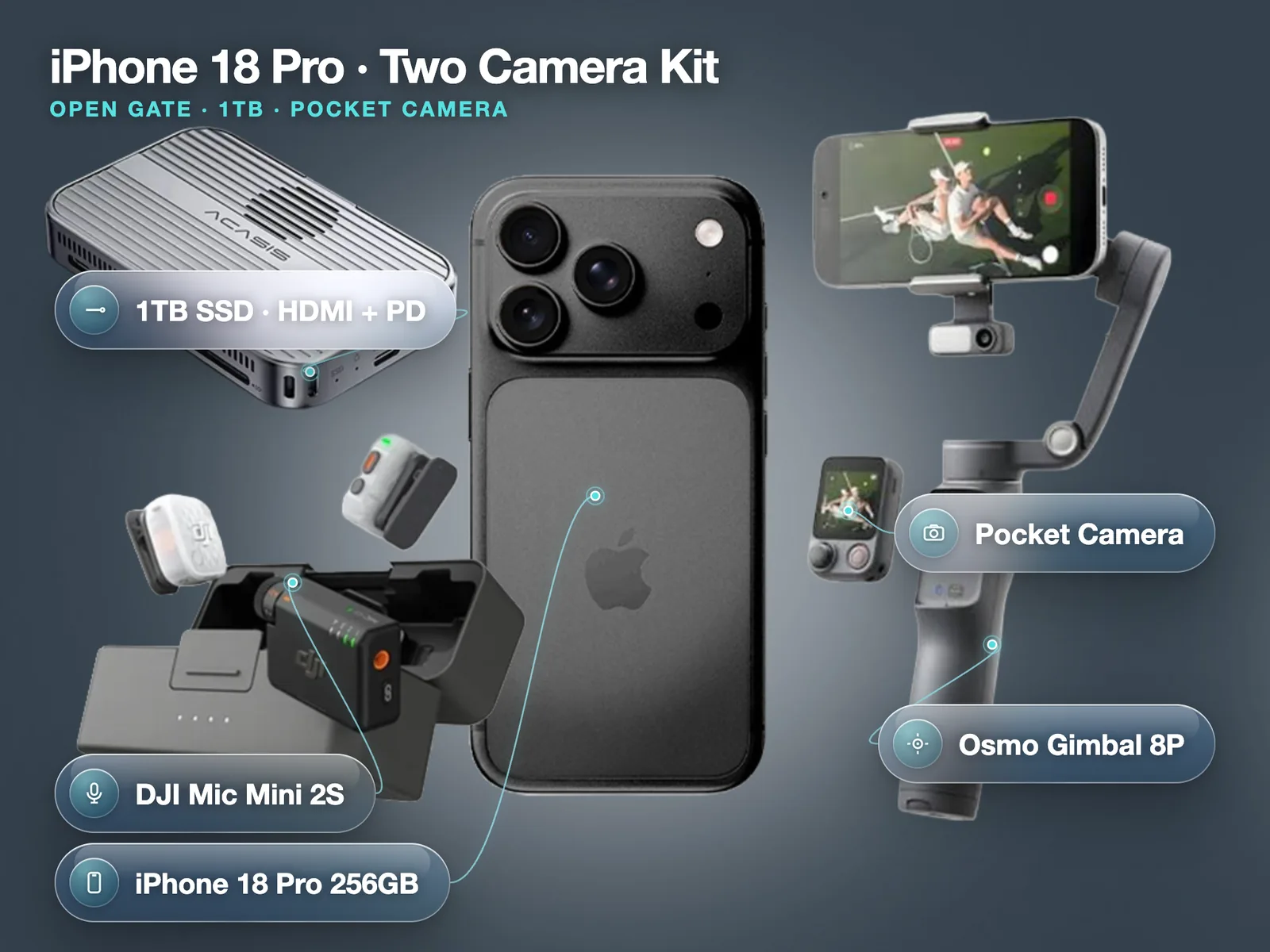
- If you have a second phone, put it on a wider angle for safety. The iPhone 18 Pro Two Camera Kit (£120 a day, £672 for 7 days) is built for two angles.
Two-person crews also look more like a "proper" interview to passers-by, which helps when you ask strangers to stop.
Getting consent and staying on the right side of the rules
This is the section most street interview guides skip. It is also the one that causes the most trouble later.
Consent and releases
A recognisable person speaking to camera is personal data under UK GDPR. If you publish their interview, you need a lawful basis, and for street content that almost always means clear consent. The ICO's UK GDPR guidance is the place to read the rules properly. What we do in practice:
- Say who you are and where it will go, before you press record. "We are filming short interviews for our Instagram and TikTok."
- Record a spoken yes on camera. Ask "Are you happy for this to be posted online?" at the start of the take. It is quick and it lives with the footage.
- Use a signed release for anything commercial, such as brand content or ads. A one-page form with name, date, contact and a signature.
- Offer a way out. Give a card or QR code with an email address so people can ask you to remove their clip.
- Be careful with children and vulnerable people. Do not interview under-18s on the street without a parent or guardian giving consent.
None of this is legal advice. If the content is for a client or a paid campaign, ask them what their legal team requires.
Permission to film in public places
London is generally welcoming to small crews, but "public" does not mean "anywhere". The Film London code of practice sets out how productions are expected to behave, and boroughs have film services through the London Filming Partnership. A handheld phone and a mic usually draw far less attention than a tripod, a light and a crew blocking the pavement, but the rules vary by borough and by landowner.
Two practical rules we give every renter:
- TfL property and roads are different. TfL says you need permission to film on its network, and its filming on roads page asks you to contact it before filming on roads, pavements, bus stops or parking bays it manages. Do not set up inside a station or at a busy bus stop.
- Private land looks public. Many London squares, shopping streets and riverside paths are privately managed. Security will ask you to move on, so pick a public pavement and stay out of doorways.
Keep the footprint tiny: no tripod across the walkway, no lights, nobody standing in the road for a shot.
Planning vox pops this week? The iPhone 18 Pro creator kit has the phone, the DJI Gimbal Osmo 8P and two DJI Mic 3 transmitters in one bag. Book the iPhone 18 Pro + Osmo 8P + Mic 3
Clean audio on a loud street
Traffic is the enemy of street interviews, and no setting removes it completely. What works:
- Mic close to the mouth. With a handle, about a fist's distance away and slightly below, angled up. Distance is the single biggest factor.
- Background behind the camera, not behind the guest. Turn people so the road is behind you. The mic picks up less of it and the shot looks calmer.
- Furry windshield on every outdoor take. Wind and the slipstream of passing buses cause low rumble that is hard to remove.
- 32-bit float on, every time. The DJI Mic 3 records 32-bit float internally on each transmitter, 48 kHz, in DJI's published specs. A sudden laugh or shout will not clip that file, even if the live track on the phone does.
- Set the live level sensibly. Aim for normal speech peaking around -12 dBFS on the phone track.
- Wait for the bus. If a siren or a bus is coming, pause and ask the question again. People rarely mind.
We go deeper on levels, wind and syncing in our DJI Mic 3 32-bit float guide.
Framing street interviews for 9:16
Most vox pops end up on Reels, TikTok and Shorts. Shoot with that in mind.
- Head and shoulders, eyes on the upper third. In 9:16 the face needs to be big. Leave a little headroom, and keep the mic handle low in the frame.
- Leave space at the bottom for captions. Platform buttons and captions cover the lower part of a vertical frame. Keep chins and mic logos above it.
- Choose a background with depth. A street receding behind the guest looks far better than a flat wall, and a shop window adds light at dusk.
- Avoid busy logos and other people's faces. Large brand signs and recognisable passers-by create problems later.
- Shoot horizontal only if you need 16:9 too. If the client wants both, shoot 4K horizontal and crop, keeping the guest centred.
Our default camera settings
| Setting | Value | Why |
|---|---|---|
| Resolution and codec | 4K HEVC | Sharp, small files, all-day recording |
| Frame rate | 25 fps | UK standard, no flicker from mains lighting |
| Lens | Main 24mm or optical-quality 2x 48mm | 2x flatters faces and simplifies backgrounds |
| Exposure | Lock on the face | Stops the image pumping as people pass |
| Audio input | DJI Mic 3 receiver over USB-C | Voice recorded with the picture |
| Stabilisation | Gimbal on, phone stabilisation standard | Natural motion on walk-and-talks |
Apple lists optical-quality 2x at 48mm on both iPhone 18 Pro models. For a head-and-shoulders vox pop it gives a more flattering perspective than the 24mm wide and lets you stand a step further back.
Power, storage and the end-of-day routine
A full street day means four to six hours of on-and-off recording. Phones run hotter and drain faster outside in winter, so plan power.
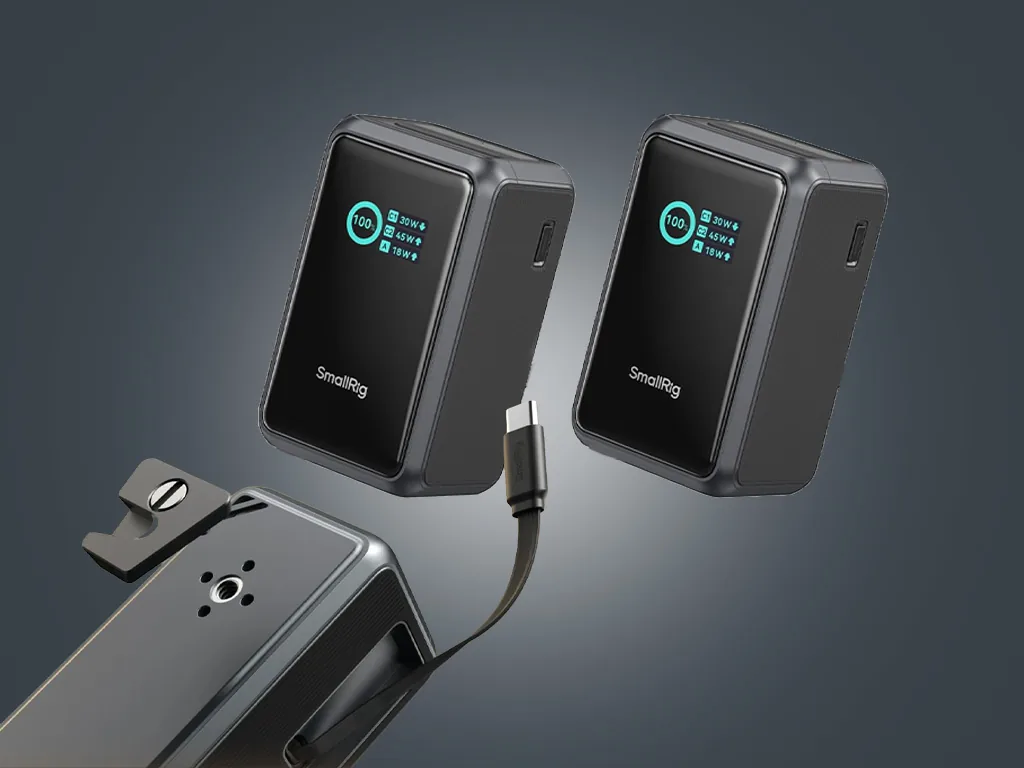
- Carry a power bank. The SmallRig Nano36 power bank pair (£30 a day, £180 for 7 days) gives 45W USB-C charging in a pocket.
- Top up the mics at breaks. Put both transmitters and the receiver back in the charging case at lunch.
- HEVC for street work. ProRes is beautiful but unnecessary for vox pops, and Apple notes that ProRes files can be up to 30 times larger than HEVC.
- Offload every evening. Copy the phone footage and the transmitter files to two places before you sleep.
Street interview checklist
| Before you leave | On the street | After the shoot |
|---|---|---|
| Phone, gimbal and mics fully charged | Consent spoken on camera at the start | Offload footage and mic files to two drives |
| Transmitters set to 32-bit float, internal recording on | Mic a fist's distance from the mouth | Note who signed releases and who said no |
| Windshields and mic handles in the bag | Road behind the camera, not the guest | Delete clips of anyone who asked to be removed |
| Printed releases and a removal QR code | Lock exposure on the face | Back up before you start editing |
| Power bank charged | Pause for buses and sirens | Return the kit charged if you can |
Renting the street interview kit in London
You book on the website or the app, and every booking needs ID verification. The booking guide walks through it. Collect from Soho, Bethnal Green or Finsbury Park.
If you already have a phone you like, the DJI Mic 3 Combo on its own is £16 a day or £80 for 7 days.
- DJI Mic 3 32-bit float on iPhone: levels, wind, placement and syncing in Resolve.
- iPhone gimbal hire with the Osmo 8P: balancing, tracking and walk-and-talk technique.
- iPhone 18 Pro vs Pro Max for filmmaking: which phone suits handheld work.
- Filming at night on iPhone: vox pops after dark under street lights.
- Short-term iPhone rental in London: how day and week hire works.
One bag, ready for the street. Phone, gimbal and two wireless mics with 32-bit float backup. Book the street interview kit