Guides
Interview Lighting Kit Hire: A Simple Three-Light Setup
A practical guide to interview lighting kit hire: what key, fill and back lights do, which lights and modifiers to hire, how to place them in a small office, and how to handle power safely on location.
 Illustrative image
The short version
- The classic three point lighting interview setup uses three lights, each with one job.
- Rental listings tend to show specs with no hint of which light does which job.
- Few guides deal with the reality of most corporate interviews: a small meeting room, white walls, overhead office lights and a window you cannot block.
- Interviews often happen in offices, homes and venues that were not designed for filming.
On this page7 sections
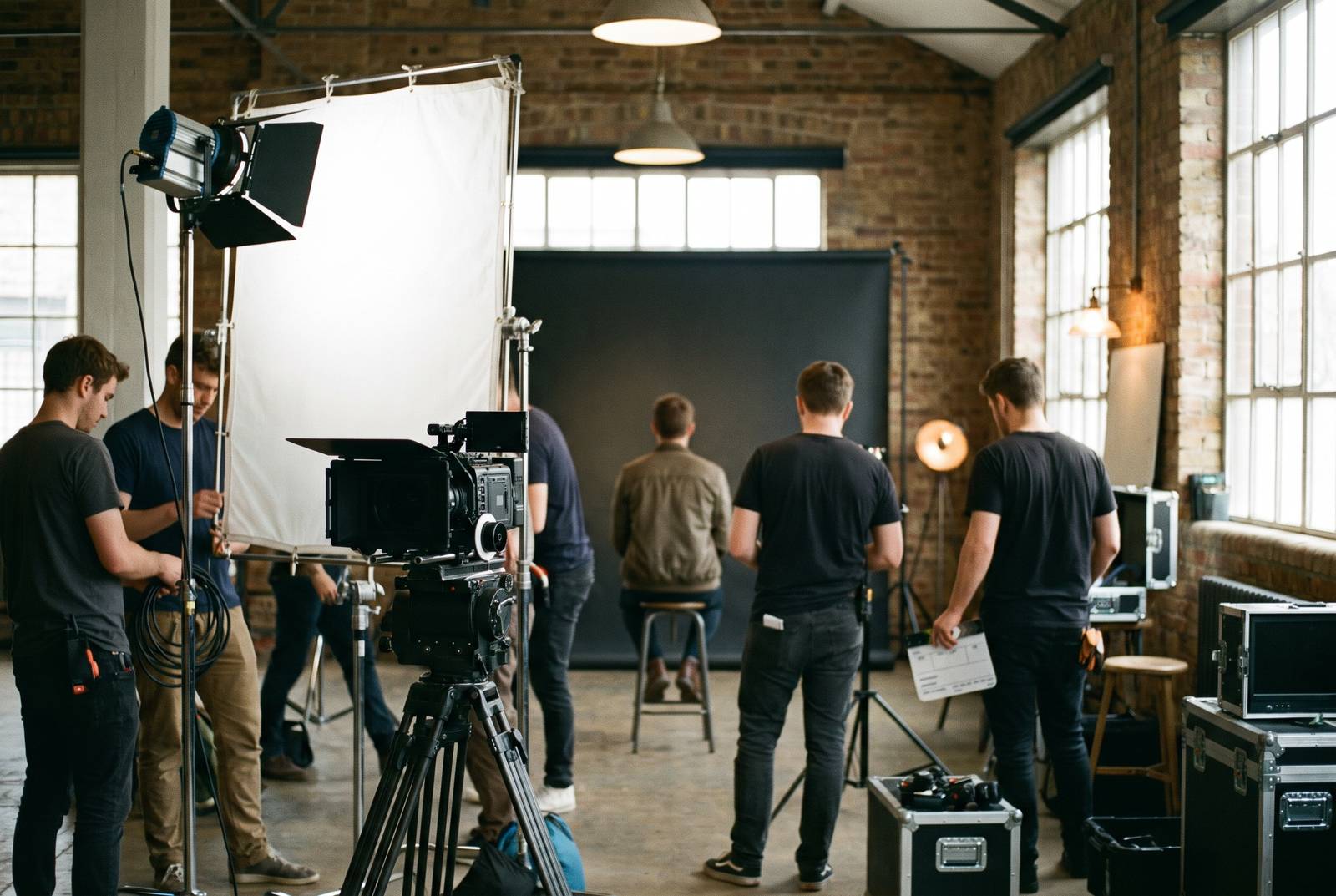
A sit-down interview looks professional when the face is lit softly, the background sits a little darker than the subject, and a thin edge of light separates the person from the wall behind them. You do not need a van full of equipment to get there. Interview lighting kit hire comes down to a few well-chosen lights, a couple of modifiers, stands and a plan for power.
This guide covers what each light does, what to hire, which modifiers suit small rooms, where to put everything, and how to keep it safe on location. It is written for people who are about to book kit and want a setup that works first time, in a real office rather than a studio.
Key, fill and back light in plain terms
The classic three point lighting interview setup uses three lights, each with one job. Once you know the jobs, choosing what to hire becomes simple.
The key light is the main source. It is the brightest light and it shapes the face. It usually sits slightly to one side of the camera and a little above eye level, angled down. Most interview shooters put the key on the side of the face that is turned away from the camera. This is often called short lighting. It gives the face more shape and keeps the side nearest the lens slightly darker, which looks more natural on screen.
The fill light sits on the other side of the camera. Its job is to lift the shadows the key creates, not to remove them. It should be softer and dimmer than the key. If the fill is as bright as the key, the face goes flat and the shot loses depth. Some people skip a fill light entirely and use a reflector or a white wall instead.
The back light sits behind the subject, usually on the opposite side to the key, pointing at the back of the head and shoulders. It draws a fine rim of light around the hair and shoulders. This pulls the person away from the background, which matters most when someone has dark hair against a dark wall.
Many interviewers add a fourth, smaller light for the background: a splash of warm light on a bookshelf, or a soft colour on a plain wall. It is optional, but it is a cheap way to make a dull office look intentional.
Which lights to hire
Rental listings tend to show specs with no hint of which light does which job. Here is how to match lights to roles for a typical interview lighting setup.
Key light: something with headroom
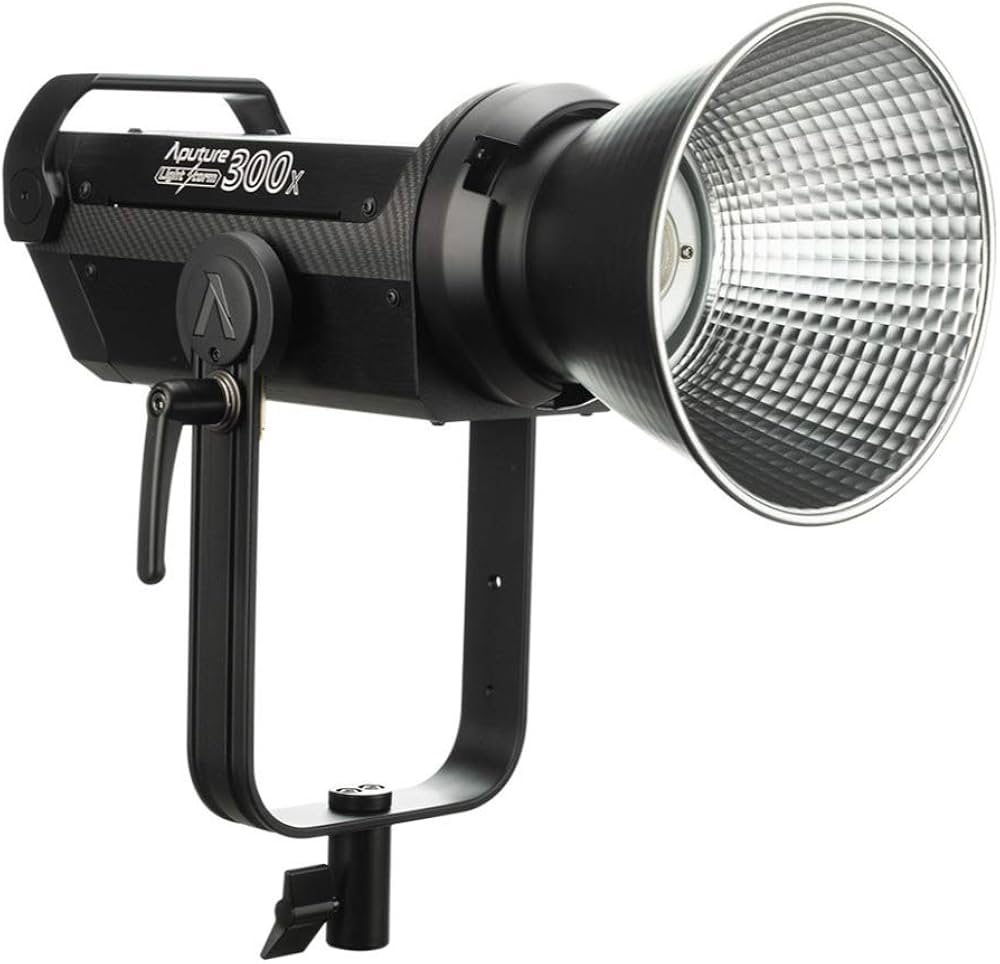
The key light goes through a softbox or lantern, and modifiers absorb a lot of output. So the key should be the most powerful light in the kit. A point-source LED in the LS 300X class is a common choice. Aputure lists the LS 300x as a bi-colour LED with a 2,700K to 6,500K range and a Bowens-S mount, with a V-mount battery option. The bi-colour range matters in offices, because you can match warm practical lamps or cool window light without gels. The Bowens-S mount means it accepts the most common softboxes and lanterns.
Colour quality matters for skin. Retail listings give the LS 300x a CRI and TLCI of 96 and a 350W maximum power draw, according to No Film School. High colour scores mean skin tones look natural and need less correction in the edit.
Fill and back light: smaller panels
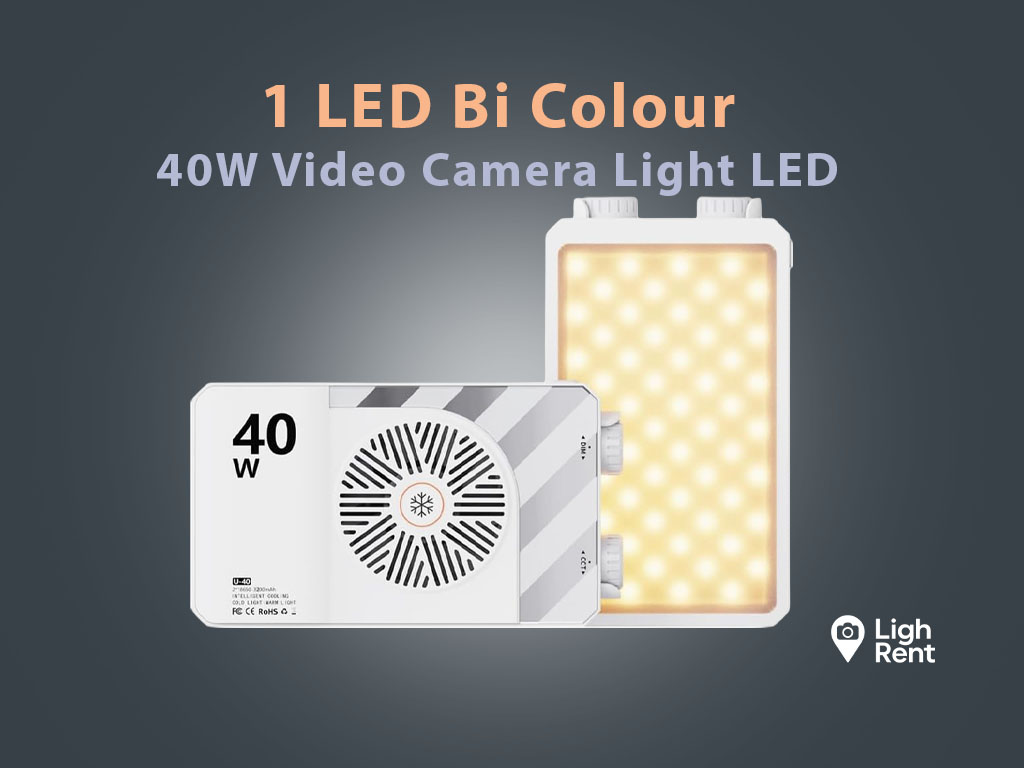
The fill and back lights do not need much power. A compact bi-colour panel is enough for either job. It is light, quick to rig on a small stand, and easy to dim right down. For a background accent, a small RGB light lets you add colour to a wall or shelf without carrying gels.
What to hire on LighRent
These listings cover every role in a three-light interview. SwainUK listings come first, all with pickup in Soho.
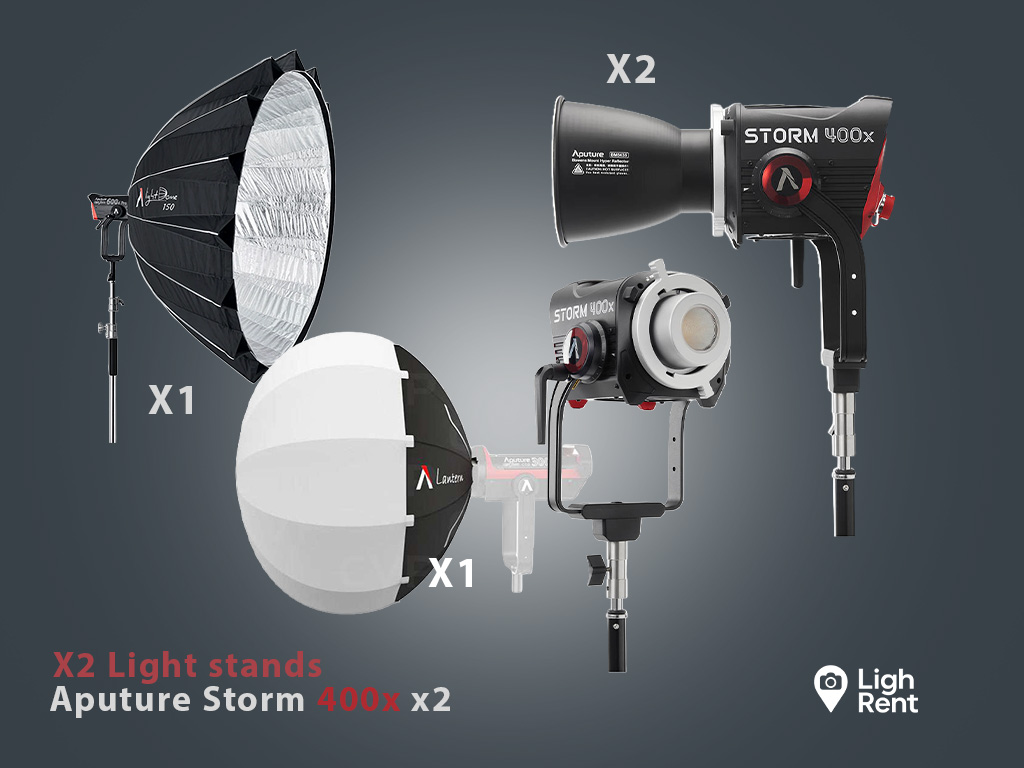
- For a two-camera or larger shoot: the Aputure studio lighting kit with 2x LS 400X from SwainUK, from £130 a day with pickup in Soho, London. Prices can change, so check the listing when you book. This gives you a powerful key plus a second strong light for a big back light or a bounced fill.
- For the key light: the Aputure LS 300X bi-colour light from SwainUK, collected in Soho.
- For the fill or back light: the 40W bi-colour LED light from SwainUK, also collected in Soho.
- For a background accent: the Amaran Ace 25c RGB light, useful for a touch of colour behind the subject.
A simple kit list
| Role | What to hire | Why |
|---|---|---|
| Key | LS 300X with a softbox or lantern | Enough output to push through diffusion, accurate colour for skin |
| Fill | Small bi-colour panel or a reflector | Lifts shadows gently without flattening the face |
| Back | Small bi-colour panel | Separates hair and shoulders from the background |
| Background | Small RGB light | Adds depth or brand colour to a plain wall |
| Support | Stands, sandbags, extension leads, gaffer tape | Keeps everything stable and cables safe |
When you hire lights for interview work, check each listing includes stands and power supplies. If not, add them. A light without a stand is no use on the day.
Softboxes and lanterns
A bare LED is a hard, small source. On a face it produces sharp shadows under the nose and chin and bright hotspots on the forehead. A modifier turns it into a large, soft source. The two you will meet most often are softboxes and lanterns.
Softboxes
A softbox is a fabric box with a diffusion panel on the front. It throws light forward in a controlled direction. You can add a fabric grid to narrow the spread further, which keeps light off the background and stops it bouncing around a small white room. Softboxes are the safer choice when you want the background darker than the face, which is the look most interviews aim for.
Lanterns
A lantern is a round paper or fabric globe. It spreads light in almost every direction, so it wraps around the face and gives very gentle shadows. The downside is spill: it lights the walls and ceiling too, which can make a small office look flat. Many lanterns come with a skirt that blocks one side. Use it to stop light hitting the background.
Which to choose
For a key light in a small room, a softbox with a grid gives you more control. A lantern works well in a larger room, or when you want a soft, open, friendly look. Because the LS 300X uses a Bowens-S mount, either type fits directly onto the light.
Two rules apply to both. First, a bigger source is softer. Second, a closer source is softer. Moving the softbox in towards the subject does more for softness than buying a larger modifier.
For fill, you often do not need a modifier at all. Bounce a small panel off a white wall, a white card or a reflector. This gives a broad, gentle fill that is hard to overdo.
Placing the lights in a small room
Few guides deal with the reality of most corporate interviews: a small meeting room, white walls, overhead office lights and a window you cannot block. Here is a placement order that works in most of them.
- Pick the background first. Look for depth: a corridor, a shelf or a corner of the room. Avoid shooting flat against a wall.
- Pull the subject away from the wall. Move the chair as far forward as the room allows. Distance between person and wall lets the background fall darker and stops shadows landing behind them.
- Set the camera. Decide whether the subject talks to the interviewer just off camera or straight down the lens. The eyeline decides which side is the short side of the face.
- Place the key. Put it on the short side, a little in front of the subject and above eye level, angled down. Bring it as close as you can while keeping it just out of frame.
- Add the fill. Place it on the camera side, lower in brightness. Turn it up slowly until the shadows soften but are still visible.
- Add the back light. Put it behind the subject on the opposite side to the key, high and out of frame. Keep it subtle: an edge, not a halo.
- Light the background last. A small accent on a shelf or wall adds depth. Keep it dimmer than the face.
Dealing with office problems
Overhead lights. Turn them off if you can. They light the top of the head and leave dark eye sockets. If they must stay on, raise your key slightly to overpower them.
Windows. Daylight is cool and changes through the day. Either close the blinds, or use the window as part of your setup and set your bi-colour lights to match it. Do not mix warm lights with cool daylight on the same face unless it is a deliberate look.
Glasses. Reflections of softboxes in lenses are common. Raise the key higher, move it further to the side, or ask the subject to tilt their head down very slightly. Check on the monitor, not by eye.
White walls. They bounce light everywhere. Use a grid on the softbox and keep lights pointed away from walls. A black cloth on a stand near the subject can add back some shadow on the fill side.
Power and safety on location
Interviews often happen in offices, homes and venues that were not designed for filming. Plan power before the day.
Know your power draw
Add up what your lights draw. The LS 300x alone has a 350W maximum power draw, and a studio kit with larger lights will draw more. Small panels draw much less. Office sockets usually cope with a modest LED kit, but older buildings may have several sockets on a single circuit. Spread your lights across different sockets where possible, and ask the venue which ones are safe to use.
Batteries as a backup
Aputure lists a V-mount battery option for the LS 300x. Batteries remove trailing cables and make you independent of the building, which helps in a crowded room or a location with poor sockets. Check runtime against your schedule and bring spares, because a key light dying mid-answer is hard to fix in the edit.
Cables, stands and heat
- Tape down every cable that crosses a walkway, or use cable covers.
- Do not daisy-chain extension leads.
- Sandbag every stand, especially stands carrying a softbox or lantern, which act like sails if someone brushes past.
- LEDs run cooler than tungsten, but light bodies and fans still get warm. Keep fabric and paper modifiers fitted correctly and away from the light face.
- Keep lights and stands clear of fire exits, and ask the venue about any rules for electrical equipment before you arrive.
Finally, leave time for setup and testing. Arrive early, light a stand-in, record a short test and check it on a decent screen before your interviewee sits down.
Hiring interview lighting in London
For LED light hire London shoots, collecting in person lets you check every light powers on and every stand and mount is in the bag before you leave. The SwainUK listings above are collected in Soho, which suits central London locations. You can browse more options on the film lighting hire in London page, and if you are based in the north of the city, look at camera and lighting hire in Finsbury Park. If you still need a body or lenses for the interview, see camera hire in London and book everything for the same day.
Keep the setup simple: a strong, soft key, a gentle fill, a subtle back light and a darker background. Hire those well and most interviews will look clean, natural and professional.
Questions people ask
What lights do I need for an interview?
A standard interview uses a key light, a fill light and a back light. The key should be the most powerful, such as an LS 300X with a softbox, while smaller bi-colour panels handle fill and back light. Add stands, sandbags and extension leads, and an optional small RGB light for the background.
Is one light enough for an interview?
Yes, a single soft key light can look good, especially with a reflector or white wall bouncing some light back as fill. You lose the separation a back light gives, so pick a background that contrasts with the subject's hair and clothing. Adding a second or third light gives you more control and depth.
What is the difference between a softbox and a lantern?
A softbox throws soft light forward in a controlled direction, and a grid narrows it further to keep light off the background. A lantern spreads soft light in almost every direction, so it wraps around the face but also lights the walls. In small rooms a softbox is usually easier to control.
Can I light an interview with battery-powered LEDs?
Yes. Aputure lists a V-mount battery option for the LS 300x, and many smaller panels also run on batteries. Batteries cut down on cables and help in locations with poor sockets, but check runtime against your schedule and bring spares.
How far should the key light be from the subject?
Place the key as close to the subject as you can while keeping it just out of frame. A closer source is softer and falls off faster, which keeps the background darker. Move it back only if the light looks uneven across the face or appears in glasses.