Guides
UK Drone Rules for Filming in 2026: IDs and Class Marks
The UK drone rules changed on 1 January 2026. Here is what the new Flyer ID threshold, the Operator ID and UK class marks mean if you are hiring a drone for a single shoot in London.
 Illustrative image
The short version
On this page6 sections
Most drone guides are written for hobby flyers who own one drone and fly it at weekends. This one is for a different reader: someone about to book drone hire in London for a single shoot, who wants to know what the law expects before they collect the kit. The UK rules changed at the start of 2026, and some of those changes affect small drones that used to sit outside most of the paperwork.
Below we cover what changed, which ID you need, what the new UK class marks mean, how the rules apply near people and in London, and what to check on a hire listing before you book. Where we quote a rule, we link to the source so you can read it in full.
What changed on 1 January 2026
The headline change is the weight at which you need a Flyer ID. From 1 January 2026 the UK Flyer ID threshold dropped from 250g to 100g. That pulls a large group of small camera drones, which many people treated as exempt, into the same system as larger aircraft. Heliguy's summary of the 2026 changes sets this out clearly.
The second change is labelling. From 1 January 2026 most new drones sold in the UK carry a UK class mark from UK0 to UK6, according to DJI's guide to the new UK drone regulations. The class mark replaces a lot of guesswork. Instead of working out what a drone weighs and how it is built, you look at the mark and follow the rules that go with it.
There is also a transition. Many drones on the hire market were built for the European system and carry an EU C class mark. Until the end of December 2027, a drone with an EU C class mark flies under the matching UK class, so a C1 drone is treated as UK1. That matters for hire, because a lot of current stock carries C marks rather than UK marks.
For someone hiring, the practical effect is simple. Smaller drones are no longer a way around the theory test, and the label on the drone now tells you a lot about where and how you can fly it.
Flyer ID and Operator ID: who needs which
The UK system uses separate IDs for separate roles. One is about the person holding the controller. The other is about the person or organisation responsible for the drone. On a hire job these can be different people, so it helps to be clear about which is which.
Flyer ID
The Flyer ID proves the pilot has passed a basic theory test. Since 1 January 2026 the threshold is 100g, down from 250g. The Flyer ID is free, lasts five years and needs a theory test on the CAA website. If you are the person flying a drone at or above that weight, this is your responsibility, whether you own the drone or hired it for the day.
Operator ID
The Operator ID is about responsibility rather than skill. According to the CAA Drone Code, the person or organisation responsible for a drone needs an Operator ID for any drone of 250g or more, or a camera drone of 100g or more, and must label the drone with it. Since almost every drone hired for filming has a camera, the 100g line is the one most shoots will meet.
| ID | Who needs it | When it applies | Key points |
|---|---|---|---|
| Flyer ID | The person flying the drone | Drones of 100g or more, from 1 January 2026 | Free, lasts five years, theory test on the CAA website |
| Operator ID | The person or organisation responsible for the drone | Any drone of 250g or more, or a camera drone of 100g or more | The drone must be labelled with it |
On a small production, one person often holds both roles. A freelance shooter who books a drone, plans the flight and flies it is both the flyer and, in most cases, the person responsible for the aircraft during the job. On a bigger shoot, a production company may be the operator while a separate pilot flies. Either way, settle who is responsible before the shoot day, not on location.
UK class marks and EU C marks
Class marks are the part of the system most guides skip when they talk about hire. They are worth understanding, because they connect the rules to the actual model you are booking.
Under the new system, most new drones sold in the UK carry a mark from UK0 to UK6. The mark reflects how the drone is built and what it weighs, and it helps decide which rules apply to where you fly and how close you can go to people. You will usually find it on a label on the drone and in the manufacturer's specifications.
Drones built for the European market carry EU C marks instead. Until the end of December 2027, those drones fly under the matching UK class. DJI gives the example of C1 being treated as UK1. So if a hire listing shows a C mark, you do not need to rule it out. You read it across to the UK class with the same number and follow those rules.
A real hire example
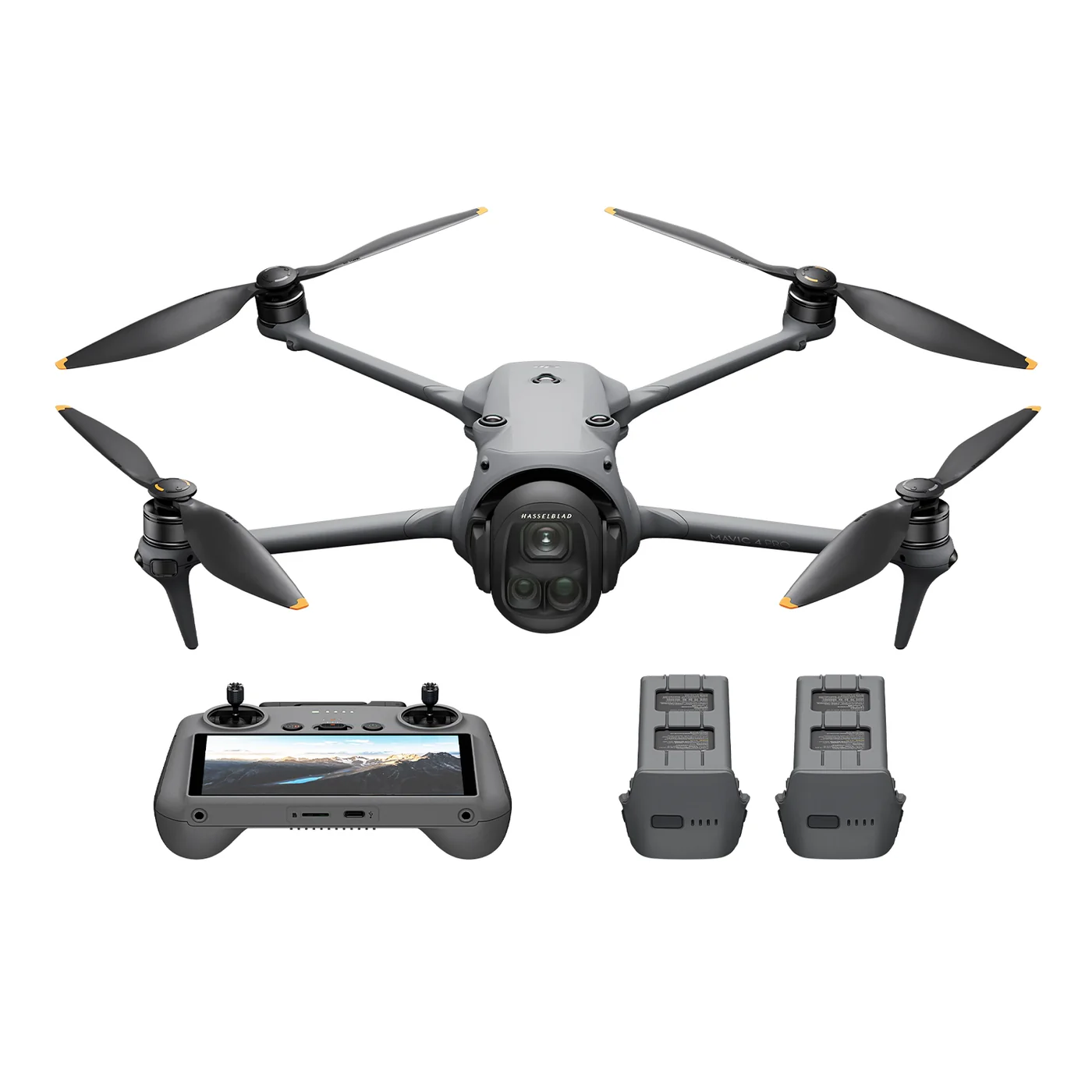
Take a popular high end camera drone. DJI's specifications for the Mavic 4 Pro list a takeoff weight of about 1063 g, a 100 MP 4/3 CMOS Hasselblad camera, and an EU class mark of C2. That puts it well above both ID thresholds, so you need a Flyer ID to fly it and the drone needs an Operator ID label. Because it is a C2 drone, it flies under the matching UK class during the transition, and it comes with distance rules that shape how you plan a shot, which we cover in the next section.
Smaller drones such as compact selfie or follow drones may sit in a lighter class with fewer restrictions. Do not assume the class from the size or the price of the hire. Check the label or the listing, and if it is not stated, ask the owner before you book.
Flying near people and in London
Distance from people is where class marks start to change your shot list. With a C2 class drone such as the Mavic 4 Pro, you keep at least 50m horizontal distance from uninvolved people and do not fly over them, as Tom's Guide notes in its Mavic 4 Pro review. Uninvolved people are anyone who is not part of your shoot: passers by, park users, people on a street you are filming.
In practice, that rules out a lot of casual city shots with a larger drone. A sweeping move over a busy square, or a tracking shot along a crowded pavement, is not something you can do just because the drone is capable of it. You either control the area so that nobody uninvolved is within that distance, or you change the shot.
Can you fly a drone in London?
Yes, but London is one of the hardest places in the UK to plan a drone shoot. It is dense, busy and has a lot of controlled airspace, including around its airports. Many open spaces are managed by bodies that set their own rules on taking off and landing. The Drone Code still applies to every flight, and some locations need permission on top of it.
For a London shoot, a sensible order of work is:
- Check the airspace for your exact location using an official drone airspace map before you commit to a date.
- Get permission from the landowner or site manager for where you take off and land.
- Walk the location and work out where uninvolved people will be at the time you plan to fly.
- Match the drone to the space. A lighter drone in a lower class can make a tight location workable, but it still has to follow the Drone Code.
- Build in a backup plan, such as a ground camera or a different angle, in case the location is busier than expected.
Many London productions end up pairing a drone with ground kit for exactly this reason. If you need that cover, camera hire in London lets you book both from the same place.
Hiring a drone: what to check before the shoot
Hiring for one job means you do not get weeks to learn a specific drone. That makes preparation more important, not less. Here is what to check, in order.
- Weight and class mark. Look for the takeoff weight and the UK or EU class mark on the listing. If either is missing, ask the owner. These decide which IDs you need and how close you can fly to people.
- Your Flyer ID. If the drone is 100g or more, you need a Flyer ID. It is free and the test is online, but do it well before the shoot rather than the night before.
- The Operator ID label. Agree with the owner who is the operator for the hire period. If that is you, the Drone Code says you need an Operator ID and must label the drone with it.
- Your account. Before collection you may be asked to verify your ID on LighRent, so allow time for that when you book.
- Batteries and accessories. Check how many batteries, which controller and which charger come with the hire. A full kit or Fly More bundle often saves a second booking.
- Practice time. If you have not flown that model before, plan a short practice flight in an open, legal space before the real shoot.
- Location permissions. Have landowner permission and your airspace check done before you collect the drone.
Drones to hire for filming
These listings by SwainUK on LighRent cover a range of shoot types. Check the class mark and weight on each listing against the rules above.
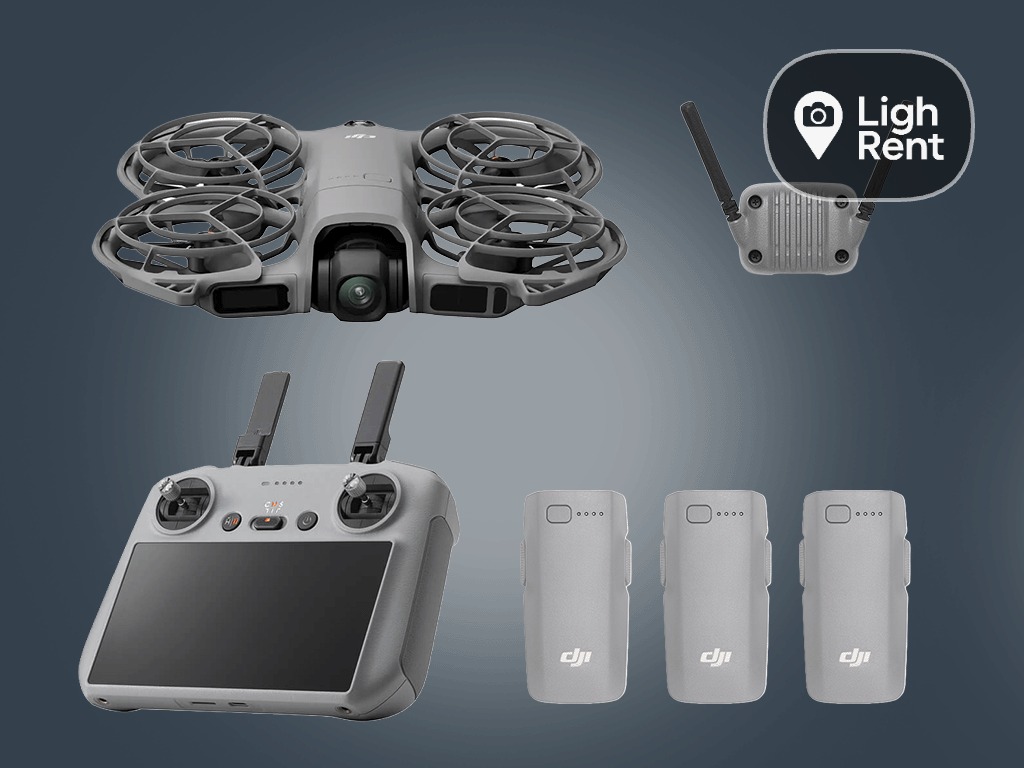
- DJI Neo 2 full kit: a compact option for simple aerial and follow shots where a larger drone would be hard to place. Check the listing for weight, since even small camera drones can now be above the Flyer ID threshold.
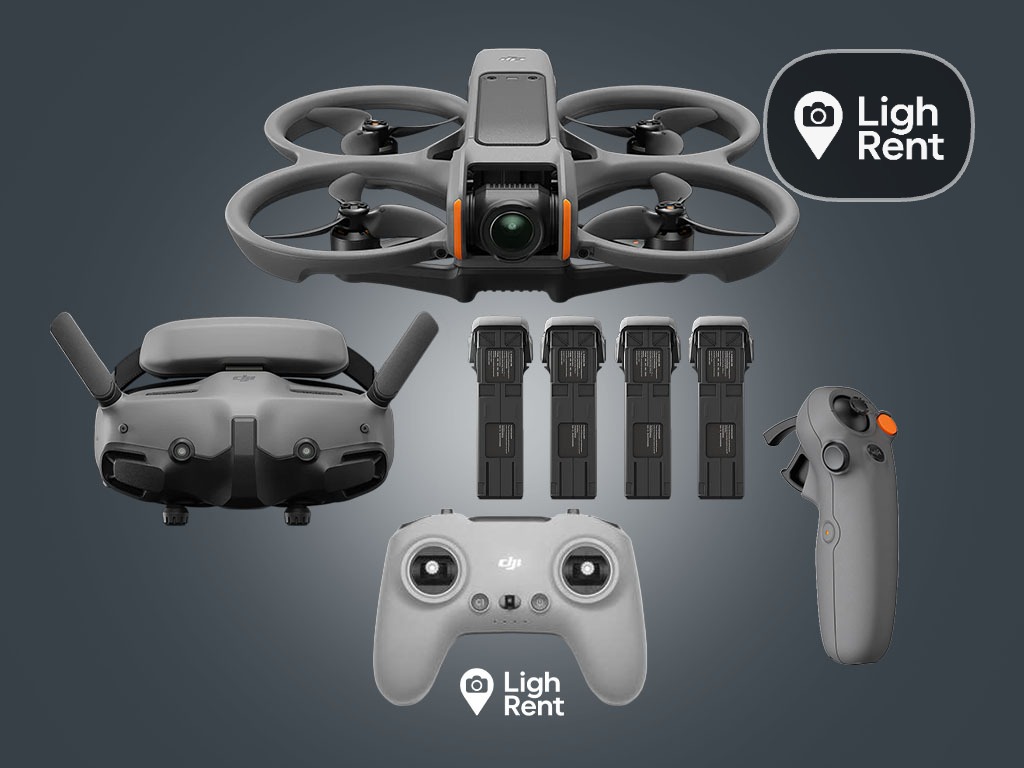
- DJI Avata 2 Fly More combo: an immersive FPV style drone for close, dynamic moves, with pickup in Soho. Plan these shots carefully around people and location permissions.
- DJI Mavic 4 Pro: the high end choice for image quality, with the 100 MP 4/3 CMOS Hasselblad camera. As a C2 drone it needs the most space from uninvolved people, so it suits controlled or open locations.
Quick summary
Since 1 January 2026, the Flyer ID applies from 100g. The Operator ID applies to any drone of 250g or more, or a camera drone of 100g or more, and the drone must carry the label. New drones carry UK class marks from UK0 to UK6, and EU C marks read across to the matching UK class until the end of December 2027. A C2 drone like the Mavic 4 Pro keeps at least 50m horizontally from uninvolved people and does not fly over them. In London, check the airspace and get landowner permission before you book. Then pick the drone that fits the space, not just the one with the best camera.
Questions people ask
Do I need a Flyer ID for a drone under 250g?
Very likely, yes. From 1 January 2026 the UK Flyer ID threshold dropped from 250g to 100g, so a drone between those weights now needs one. The Flyer ID is free, lasts five years and needs a theory test on the CAA website.
What is the difference between a Flyer ID and an Operator ID?
The Flyer ID belongs to the person flying the drone and shows they have passed the theory test. The Operator ID belongs to the person or organisation responsible for the drone, and the drone must be labelled with it. It applies to any drone of 250g or more, or a camera drone of 100g or more.
What are UK class marks for drones?
From 1 January 2026 most new drones sold in the UK carry a UK class mark from UK0 to UK6. The mark helps decide which rules apply, including how close you can fly to people. Until the end of December 2027, a drone with an EU C class mark flies under the matching UK class, so C1 is treated as UK1.
Can I fly a drone in London?
Yes, but it takes more planning than most places. London has busy controlled airspace, including around its airports, and many sites have their own rules on taking off and landing. Check the airspace, get landowner permission and plan around people, for example keeping at least 50m horizontally from uninvolved people with a C2 drone.
Do I need my own Operator ID when I hire a drone?
It depends on who is responsible for the drone during the hire. The Drone Code says the person or organisation responsible needs an Operator ID and must label the drone with it. Agree with the owner who takes that role before the shoot, and if it is you, register and label the drone with your own ID.