Guides
Do You Need a Permit to Film in London? Small Crew Guide
Whether you need a filming permit in London depends on your crew size, the borough, your kit and who owns the ground. Here is how small crews plan street and location shoots, with Westminster rules, red routes, parks, an example fee and a compact kit.
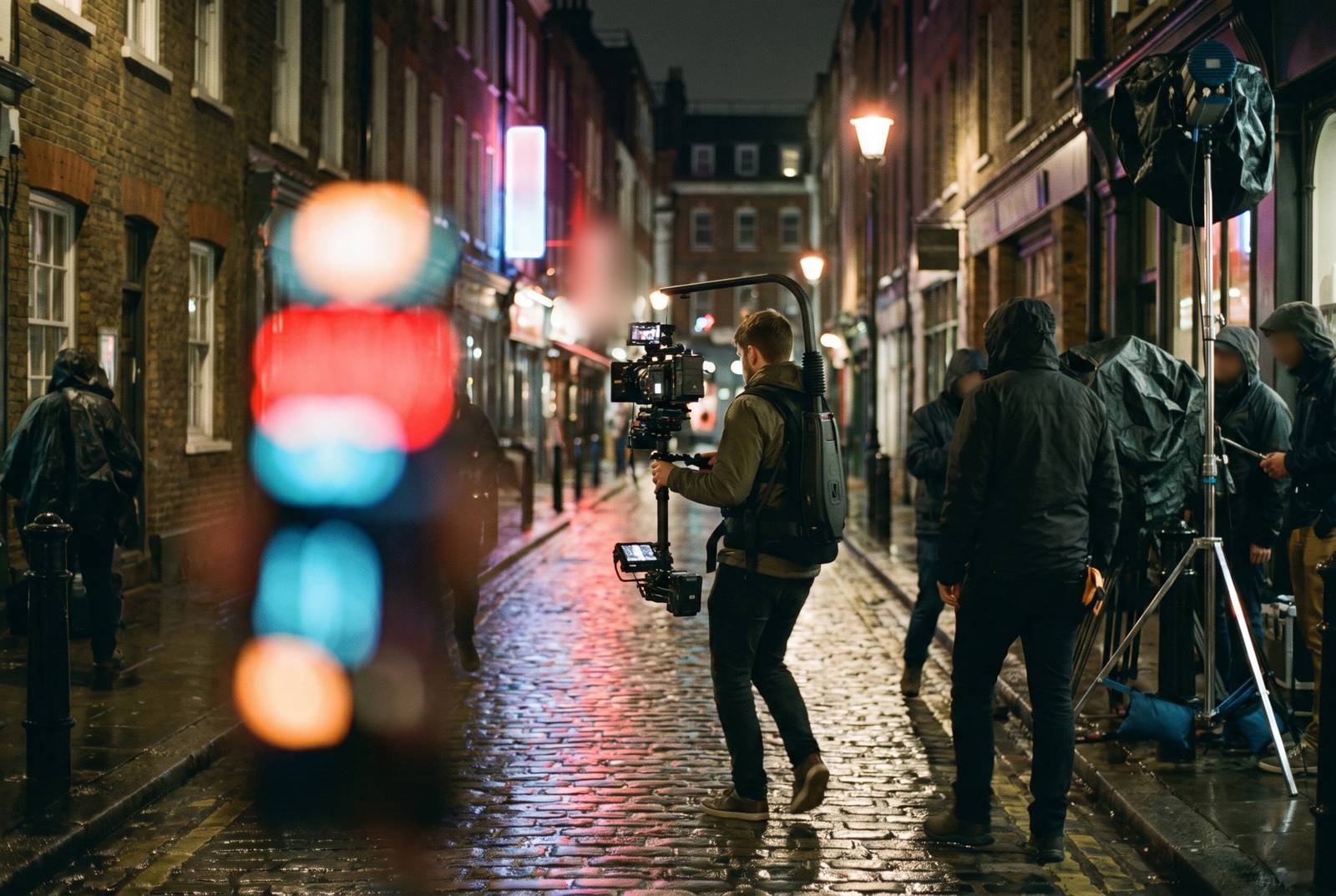 Illustrative image
The short version
- According to Film London's advice for small crews, a small crew is five people or fewer, and that count includes participants and actors.
- The busiest parts of central London have the tightest rules.
- Tripods are where many small crews come unstuck.
- Some of the most famous backdrops in London sit outside borough control.
On this page8 sections
If you are planning a street or location shoot, there is no blanket answer to whether you need a filming permit in London. It depends on where you stand, how many people are with you, what you put on the ground and who owns the land under your feet. Get those right and many small shoots are simple to arrange. Get them wrong and you can be moved on halfway through a take.
This guide walks through the filming in London rules in the order you will meet them: crew size, the stricter central boroughs, tripods and roads, parks and private land, then fees. It ends with a compact kit that helps a small crew stay small. Rules and fees change, so always confirm the details with the relevant film office before you go out.
What counts as a small crew in London
According to Film London's advice for small crews, a small crew is five people or fewer, and that count includes participants and actors. It is not only the people behind the camera. Your presenter, your interviewee and the friend carrying the bags all count.
Film London also notes that most London boroughs make exceptions for small crews. That is good news for documentary, social media and corporate shoots. But an exception is not the same as a free pass. Each borough sets its own terms, and many still expect you to tell them in advance or apply through a lighter process. Read the specific borough's guidance before you assume you are covered.
When you plan your head count, list every person who will be on location at the same time:
- Camera operator or director of photography
- Director or producer
- Sound recordist, if you have one
- Presenter, actors or contributors
- Runners, assistants, make-up, clients or anyone else who turns up to watch
It is easy to go over the limit by accident. A client who wants to see the shoot, or a contributor who brings a friend, can push you into a different category. Agree the head count with everyone before the day, and ask extra people to wait away from the set.
Small crew filming in London is also about footprint. If you spread cases, stands and cables across the pavement, you will look like a bigger production whatever your head count says. Keep kit on your body or in a bag where you can, and keep walkways clear.
Westminster and the City of London: the stricter rules
The busiest parts of central London have the tightest rules. Film London's small-crew advice says Westminster has a stricter small-crew limit of three people, not five. That matters because so many shoots head there. Soho and much of the West End fall within Westminster, so a quick piece to camera on a familiar street may already put you under the tighter limit.
Tripods change things too. Crews using a tripod in Westminster or the City of London need a Notice of No Objection. If your plan for a film permit in Westminster includes a tripod, you are in that process, even with a tiny crew.
Timing is the other trap. Small-crew applications need at least three days' notice. Treat that as a minimum, not a target. If your shoot date is fixed, apply as soon as you know the location. If you are waiting on a client to sign off the script or the contributor, build those three days into your schedule from the start.
Practical points for central shoots:
- Count everyone against the Westminster limit of three, including contributors and presenters.
- Decide early whether you truly need a tripod, because that decision shapes your paperwork.
- Check whether your spot is in Westminster, the City of London or a neighbouring borough. Boundaries run through busy areas, and the rules change at the line.
- Hold a backup location in a different borough in case your application is not approved in time.
If your shoot moves from Westminster into the City or another borough, treat each part as its own application. Do not assume approval in one area carries over to the next street.
Tripods, red routes and stations
Tripods are where many small crews come unstuck. In Westminster and the City of London, they trigger the Notice of No Objection described above. In other boroughs the rules vary, but a tripod changes how you look to the public and to officials. It takes up pavement space, it can trip pedestrians and it tells everyone a production is under way. If your borough's guidance mentions tripods, follow it. If it does not, ask before you set up.
Red routes are a separate matter, and they catch out crews who think borough permission covers everything. Roads with double or single red lines are managed by Transport for London, not the borough, according to TfL's guidance on filming and photography on the roads. So filming on a red route goes to TfL, even if the borough has already agreed to the rest of your shoot.
Look at the kerb markings when you scout. Many main roads through central London are red routes, and a shot that feels like an ordinary pavement piece may sit right beside one. Ask yourself:
- Are there red lines on the road next to your camera position?
- Will any crew member, vehicle or piece of kit end up on the carriageway?
- Do you plan to stop a vehicle nearby to drop off people or kit?
- Are you filming moving traffic as part of the shot?
If the answer to any of these is yes, contact TfL as well as the borough.
Stations are a grey area for street shooters. The sources behind this guide do not set out rules for stations, so do not assume borough permission covers them. Treat stations and their forecourts as somebody else's property and contact the operator well before the shoot.
Parks, squares and private land
Some of the most famous backdrops in London sit outside borough control. Film London's guidance on getting permission explains that the Royal Parks, Trafalgar Square and Parliament are managed by their own agencies, not the boroughs, and need their own permission. A borough approval for the streets nearby does not extend into them.
That has a knock-on effect on planning. If you want a walk-and-talk that starts on a Westminster street and ends in a Royal Park, you are dealing with separate bodies. Allow time for each, and make sure the details match across every application: dates, times, crew size and kit.
Private land works on the same principle. Many squares, courtyards, shopping areas and new developments feel public but are privately owned or managed. The landowner decides whether you can film there. Look for signs, speak to security or estate management, and get permission in writing if you can. If security asks you to stop, stop politely and move on. Arguing on camera rarely ends well.
Inside shops, cafés and venues, permission comes from the owner or manager. Get it before you set up, and agree where you can stand, what you can show and whether staff or customers can appear in the background.
What it costs: an example borough fee
Fees are set by each borough, so there is no single London price. As an example, Southwark's filming fees and lead-in times for 2026/27 list the following for small crews:
| Southwark 2026/27, small crew | Fee |
|---|---|
| Admin fee, small crew (1-5) filming on location | £215 |
| Small-crew street filming | £100 |
Fees differ by borough, so use these figures as an illustration of the kind of charge to expect, not as a quote for your shoot. Check the fee schedule of the borough you are filming in, and confirm which category your shoot falls into. The difference between street filming and filming on a specific location can change what you pay.
When you build your budget, include:
- The borough fee for each borough you film in
- Any separate permission from TfL, a park agency or a private landowner, each of which may have its own terms
- Kit hire for the shoot day
- A contingency for a reshoot if the weather or a contributor lets you down
Keeping your crew within the small-crew limits is often the simplest way to keep these costs down, which brings us to kit.
A compact kit that keeps your crew small
The kit you hire shapes your crew. Every extra role, from a boom operator to a grip setting up a tripod, adds a body to your head count and a footprint to the pavement. Choose kit that lets fewer people cover more jobs, and you stay inside the limits more easily.
These LighRent listings from SwainUK are built for that kind of shoot:
- Camera and audio together. The Sony FX3 with 16-35mm GM and DJI Mic 3 kit puts a compact cinema camera, a wide zoom and wireless microphones in one hire. The wide lens lets you work close to your subject on narrow pavements, and the wireless mics mean you do not need a separate sound recordist holding a boom.
- A stabiliser for moving shots. The DJI RS 4 Pro combo gives you smooth handheld movement for walk-and-talks and tracking shots without spreading legs across the pavement. It does not automatically put you outside any tripod rule. How a borough treats a gimbal is its decision, so describe your kit honestly in any application.
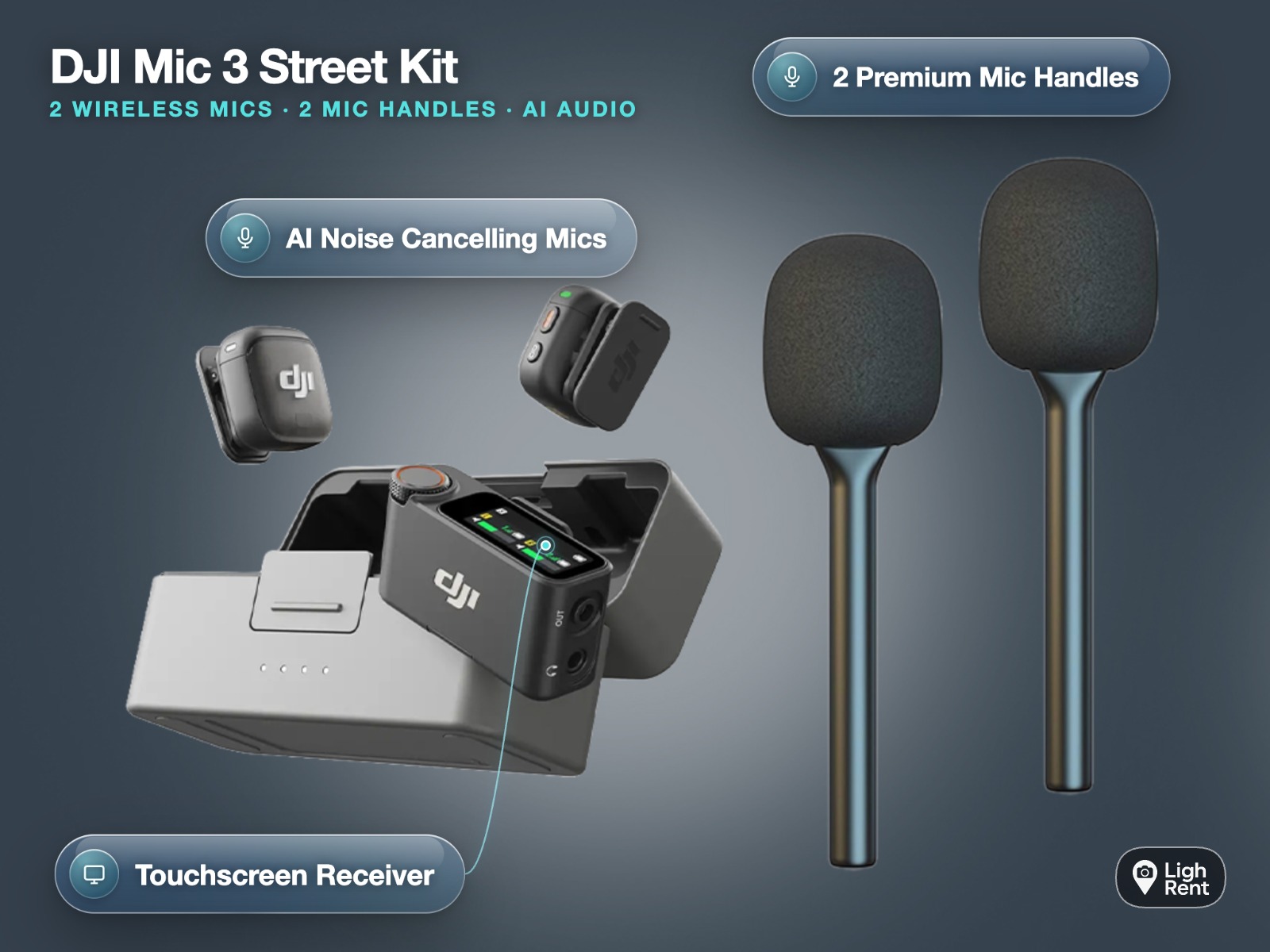
- Audio for interviews and vox pops. The DJI Mic 3 street interview kit clips onto your presenter and contributor, with the receiver on your camera or phone. It keeps sound clean on busy streets without adding a crew member.
With kit like this, a crew of three can cover a lot: an operator running camera and gimbal, a presenter and a contributor. That fits the Westminster limit, as long as nobody else joins you on location.
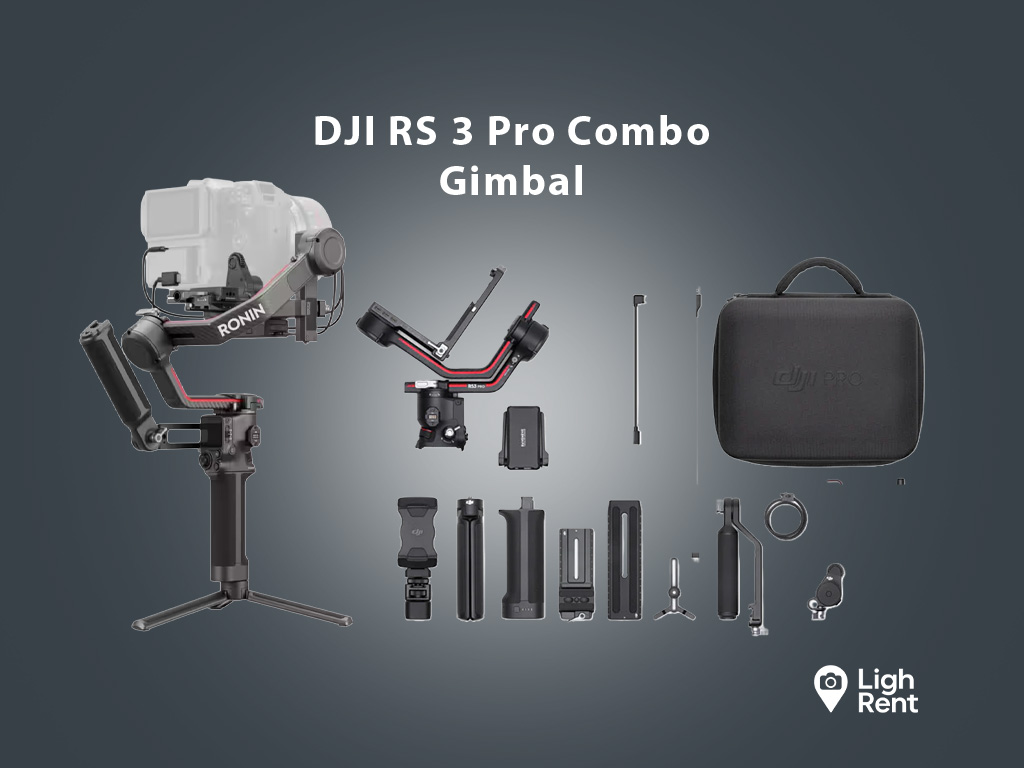
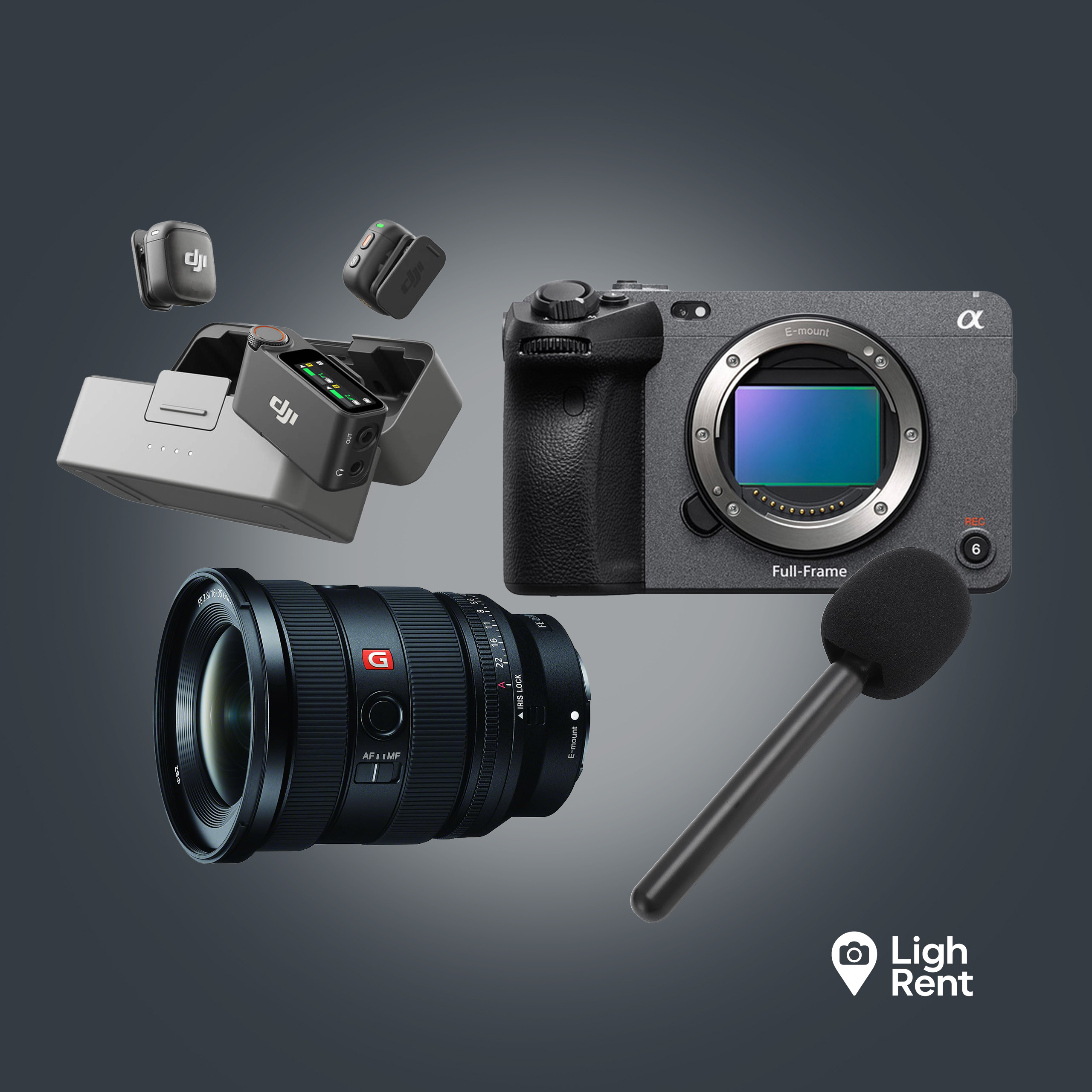
These SwainUK listings are collected in Soho, which is handy for West End shoots. You can browse more camera hire in Soho, or look across the city for camera hire in London if your shoot starts elsewhere.
If you want to go even smaller, a phone can be your camera. Our guide to a street interview kit for iPhone covers microphones, grips and settings, and you can find iPhone filmmaking kit hire in London for the extras. A phone does not change the rules, though. Crew size, tripods, red routes, parks and private land all apply whatever you shoot on.
A quick pre-shoot checklist
- Name the borough for every location, and check whether any spot falls in Westminster or the City of London.
- Count every person who will be on location, including contributors, against the small-crew limit for that borough.
- Decide whether you need a tripod, and if so, allow for a Notice of No Objection in Westminster or the City.
- Check the kerb for red lines and contact TfL if you are on or beside a red route.
- Get separate permission for Royal Parks, Trafalgar Square, Parliament, stations and private land.
- Apply early, with at least three days' notice for small-crew applications where that applies.
- Budget for the borough fee, any other permissions and your kit hire.
- Carry your approvals with you on the day, on paper or on your phone.
A small, well-planned crew with compact kit can shoot almost anywhere in London. The work is in the planning: know your borough, count your people, check the ground and ask the right body before you roll.
Questions people ask
Do I need a permit to film on the street in London?
It depends on the borough, your crew size and your kit. Film London says most London boroughs make exceptions for small crews, but each borough sets its own terms and many still expect notice or a simple application. Westminster and the City of London are stricter, so always check the borough's guidance before you shoot.
How many people count as a small crew in London?
Film London defines a small crew as five people or fewer, including participants and actors. Westminster has a stricter limit of three people. Count everyone on location at the same time, not only the people behind the camera.
Can I use a tripod when filming in Westminster?
Yes, but crews using a tripod in Westminster or the City of London need a Notice of No Objection. Small-crew applications need at least three days' notice, so plan ahead. If you choose to work handheld or on a gimbal instead, describe your kit honestly in any application.
Who do I ask to film on a red route?
Roads with double or single red lines are managed by Transport for London, not the borough. That means filming on a red route goes to TfL, even if the borough has approved the rest of your shoot. Check the kerb markings when you scout your location.
How much does a London filming permit cost?
Fees are set by each borough and differ across London. As an example, Southwark's 2026/27 fee schedule lists a £215 admin fee for a small crew (1-5) filming on location and £100 for small-crew street filming. Parks, TfL and private landowners may have their own separate terms.