Guides
Aputure Light Hire London: Which LED for Which Shoot
Choosing between the Aputure LS 300X, LS 400X and Storm 400x for a London shoot? This guide compares colour range, CRI, modifiers and power, then sets out kits for interviews, studio work and softbox-heavy shoots.
The short version
- All three are LED film lights built around a single powerful source that takes a modifier on the front.
- A bi-colour light lets you dial the colour of white light.
- Power is the part most people forget until they arrive on location.
- Check the listing details for what is in the case: head, control box, reflector, modifiers, stands, cables and batteries.
On this page7 sections
If you are booking Aputure light hire in London, the brand is usually settled already. The real question is which head, which modifier and which power source suit the job in front of you. Spec sheets tend to list lux figures and stop there. This guide works the other way round. It starts with the shoot and then picks the light.
We cover the Aputure LS 300X, the LS 400X kit and the Storm 400x with softboxes, all listed on LighRent by SwainUK with pickup in Soho. If you want to browse wider first, our page on film lighting hire in London lists more heads, panels and accessories from owners across the city.
LS 300X, LS 400X or Storm 400x
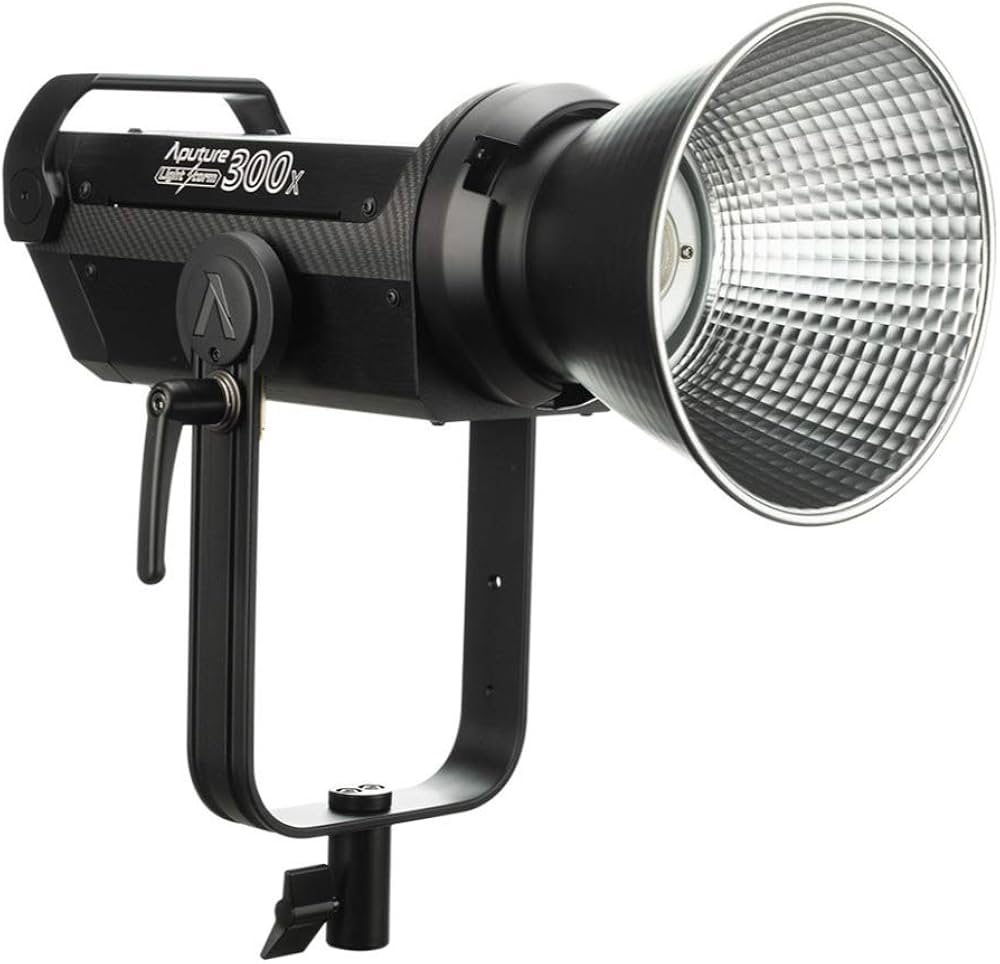
All three are LED film lights built around a single powerful source that takes a modifier on the front. That design is what makes them so useful. One head can be a hard key, a soft wrap or a broad fill depending on what you mount on it.
Aputure LS 300X
The LS 300X is the workhorse. Aputure lists it as a bi-colour LED with a 2,700K to 6,500K range and a Bowens-S mount, with a V-mount battery option (Aputure LS 300x). Retail listings give it a CRI and TLCI of 96 and a 350W maximum power draw (No Film School: Aputure LS 300x).
In practice it suits interviews, small corporate jobs, music video setups in tight rooms and anything where you need a strong key that still fits in a small car. SwainUK lists the Aputure LS 300X bi-colour light on LighRent from £55 a day, pickup in Soho (listing price on 15 Nov 2026; prices can change).
Aputure LS 400X studio kit
The LS 400X sits above the 300X in Aputure's range and is the choice when you want more headroom, for example when pushing light through heavy diffusion or lighting a wider frame. SwainUK lists an Aputure studio lighting kit with 2x LS 400X, which gives you a matched pair for key and fill, or key and background. Check the listing for the current price and exactly what comes in the case.
Aputure Storm 400x with softboxes
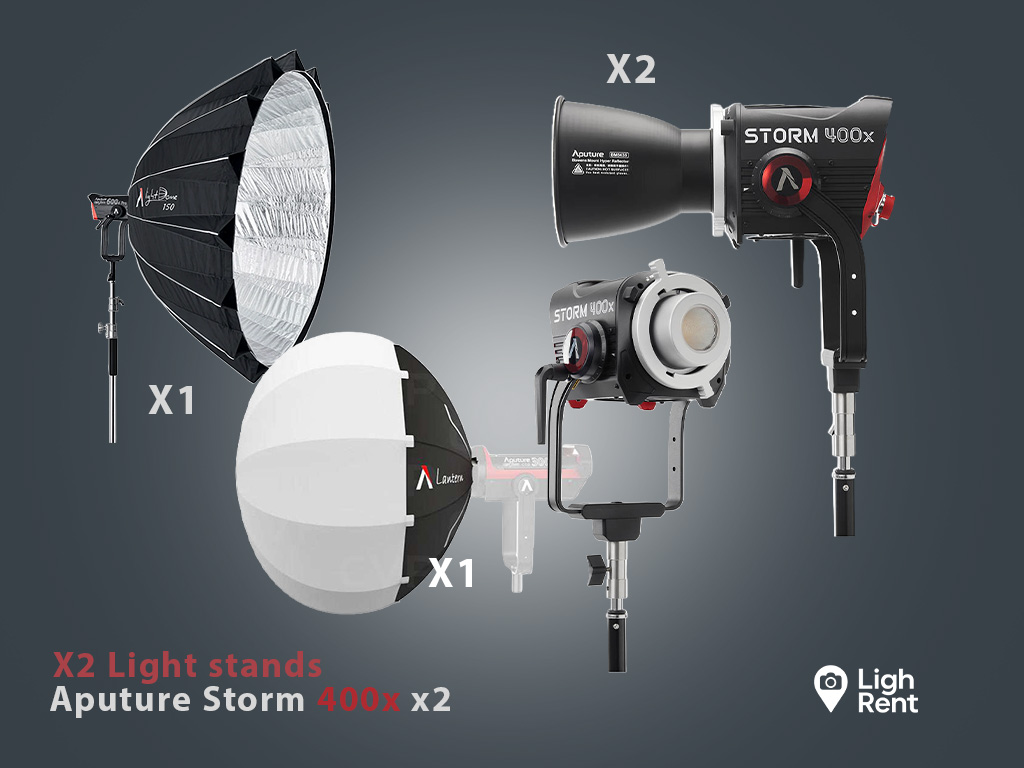
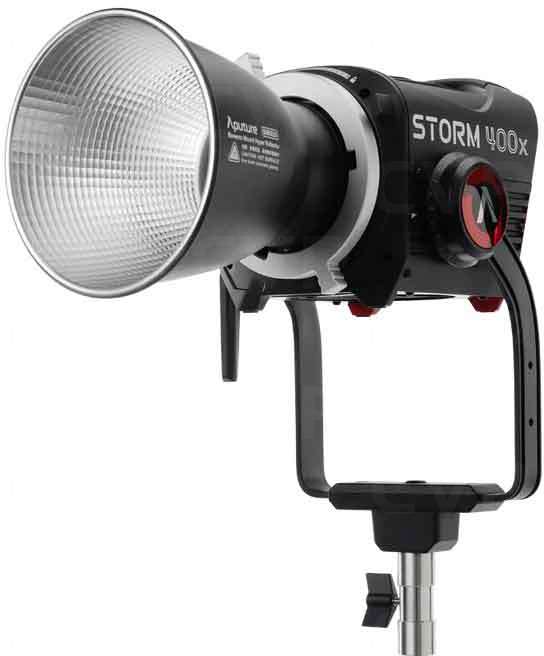
The Storm 400x is Aputure's newer line. The listing here is useful because it comes with softboxes, so you are not left sourcing modifiers separately. That makes it a good fit for beauty, portrait and product work where soft, even light is the whole point. SwainUK lists the Aputure Storm 400x with softboxes on LighRent from £110 a day, pickup in Soho (listing price on 15 Nov 2026; prices can change).
Quick comparison
| Light | Best for | Hire on LighRent |
|---|---|---|
| Aputure LS 300X | Interviews, small sets, single key light, location work | From £55 a day, Soho |
| Aputure LS 400X kit (2x LS 400X) | Studio shoots, matched key and fill, larger frames | See listing for current price, Soho |
| Aputure Storm 400x with softboxes | Beauty, portraits, product, soft frontal light | From £110 a day, Soho |
A simple rule: if you are working alone or in a small room, start with the LS 300X. If you need a matched pair for a studio, take the LS 400X kit. If the brief says soft and flattering and you want the modifiers sorted, take the Storm 400x package.
Colour temperature and CRI in practice
A bi-colour light lets you dial the colour of white light. On the LS 300X that runs from 2,700K to 6,500K. The warm end sits close to household tungsten bulbs and practical lamps. The cool end sits close to daylight through a window.
This matters most on location. Say you are filming an interview in a London office with big windows on one side and warm desk lamps behind the subject. You can set your key close to the daylight end so it blends with the window, then let the lamps glow warm in the background for depth. Or you can warm the key to match the practicals and gel the window. Bi-colour gives you that choice without carrying a bag of correction gels.
CRI and TLCI are both measures of how faithfully a light renders colour compared with a reference source. CRI is the older, more general score. TLCI was designed with cameras in mind. A score of 96 on both, as retail listings give for the LS 300X, means skin tones, fabrics and product colours come out close to how they look in person. You spend less time fixing odd green or magenta casts in the grade.
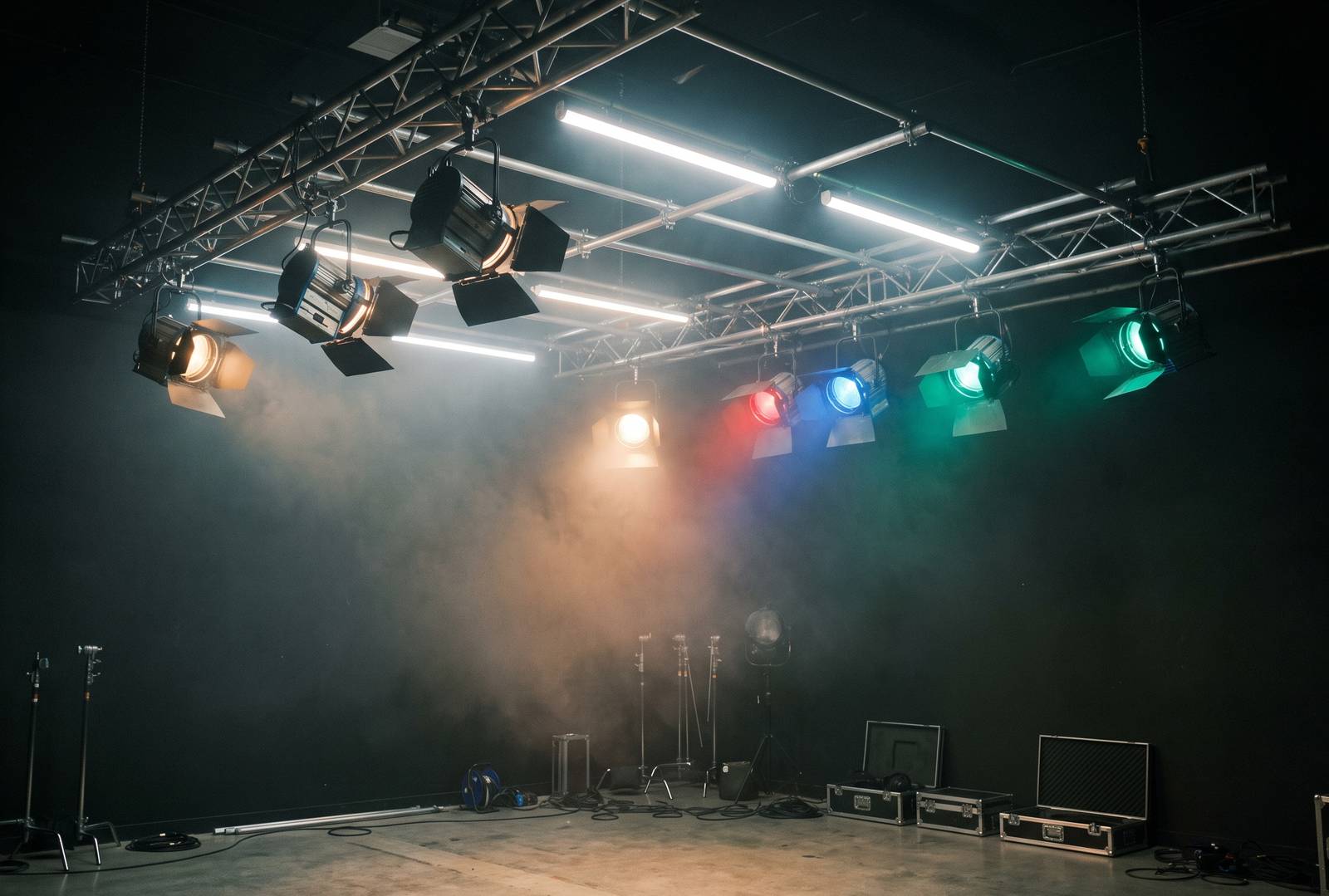
One limit to know: a bi-colour light gives white light along its range, not saturated colour. If your idea is closer to a stage look, with deep blues, reds and coloured beams cutting through haze, you need gels or RGB fixtures as well. Haze also changes how much output you need, because the light is scattered before it reaches your subject.
Modifiers: dome, lantern or softbox
The LS 300X uses a Bowens-S mount. Bowens is a bayonet mount that started in stills photography and became the standard fitting for a huge range of softboxes, reflectors and lantern modifiers. Because so many makers build for it, you can hire a head from one owner and a modifier from another and they will usually fit. Always confirm the mount on both listings before you book.
Dome or deep softbox
A dome style softbox gives soft, directional light with a gentle falloff. It is the standard interview key. Add a grid on the front and you control spill, so the light stays on your subject and off the background. That separation is what makes a talking head look considered rather than flat.
Lantern
A lantern throws soft light all round, like a giant paper ball. It is good for overhead ambient light in a dining scene, wrapping a group, or lifting the base level in a room without obvious shadows. Most lanterns come with a skirt so you can stop light hitting the ceiling or a nearby wall.
Rectangular softbox
A rectangular or strip softbox gives a clean, even source that reads well in reflections. That is why the Storm 400x package with softboxes suits beauty, product and portrait work. Catchlights in the eyes look tidy, and glossy products pick up a neat highlight rather than a hot spot.
Stands and safety
Few guides mention stands alongside modifiers, but they go together. A large softbox on a powerful head is top heavy. Use a sturdy stand rated for the weight, extend the thickest sections first and weigh the base with sandbags, especially in busy studios or public spaces. Ask the owner which stands and grip come with the listing, and add more if the job calls for booming a light over a subject.
Mains or battery power
Power is the part most people forget until they arrive on location. Retail listings give the LS 300X a 350W maximum power draw. On mains in a studio that is straightforward. Plug the control box into a properly rated extension, tape down the cable run and you are done.
Aputure also lists a V-mount battery option for the LS 300X. Battery power is what you want when there is no socket nearby, when cables would be a trip hazard in a public space, or when you need to move the light quickly between setups. Think rooftops, parks, car interiors and walk and talk shots along a street.
The trade off is runtime and output. A light drawing its full power empties batteries faster than one running dimmer. Before you book, ask the owner whether batteries are included, how many, and whether the light can reach the output you need on battery alone. If your shoot runs long, plan a charging point or a mains fallback.
A practical approach many London crews use: run mains whenever a socket is safely reachable and keep batteries for the moves. Mains gives you steady output all day. Batteries give you freedom for the shots where cables would slow you down.
Three kits for three jobs
Here is how the listings fit common jobs. LighRent listings by SwainUK come first, and you can add accessories from other owners where needed.
Interview or talking head
- Key: the Aputure LS 300X with a dome softbox and grid, set at an angle to the subject.
- Fill: a bounce board or a small panel on the opposite side, kept low so the shadow side still has shape.
- Back light: a small LED behind the subject to separate hair and shoulders from the background.
- Power: mains where you can, with a V-mount battery as backup for awkward rooms.
For solo creators filming social content, a lighter option is the social media lighting and audio kit, which bundles lights with sound so you can record clean audio on the same booking.
Studio portrait or fashion
- Key and fill: the LS 400X kit, giving you a matched pair so colour and output stay consistent across the frame.
- Modifiers: a large softbox or lantern on the key, a second modifier or bounce on the fill.
- Background: use the second head or a separate light to control the backdrop tone.
- Space: if you need somewhere to shoot, browse studios and spaces listed on LighRent.
Beauty and product
- Main light: the Storm 400x with softboxes, positioned frontally or slightly above for soft, even light.
- Detail: reflectors under the face or product to lift shadows.
- Control: flags and grids to stop spill on glossy surfaces.
If your shoot is in north London, it may be quicker to collect locally. See camera and lighting hire in Finsbury Park for owners in that area.
Before you book
Check the listing details for what is in the case: head, control box, reflector, modifiers, stands, cables and batteries. Confirm the pickup time in Soho fits your call time, and allow for traffic if you are driving across town. Prices quoted here are listing prices on 15 Nov 2026 and can change, so treat them as from prices. Finally, test every light and modifier at pickup so there are no surprises on set.
Questions people ask
Which Aputure light should I hire?
For interviews and small sets, the LS 300X is the usual choice and SwainUK lists it from £55 a day in Soho. For studio work where you want a matched pair, the Aputure studio lighting kit with 2x LS 400X makes sense. For beauty, portrait and product work, the Storm 400x with softboxes, listed from £110 a day, comes with the modifiers already sorted.
What does CRI 96 mean?
CRI measures how accurately a light shows colours compared with a reference source, and higher is better. Retail listings give the LS 300X a CRI and TLCI of 96, which means skin tones and product colours look close to real life on camera. In practice you spend less time correcting colour casts in the edit.
Can Aputure lights run on batteries?
Yes, Aputure lists a V-mount battery option for the LS 300X. Battery power is ideal on location where sockets are far away or cables would be unsafe. Runtime and maximum output depend on the batteries, so ask the owner what is included and plan a mains fallback for long shoots.
What is a Bowens mount?
Bowens is a bayonet fitting that began in stills photography and is now a standard mount for softboxes, lanterns and reflectors. The LS 300X uses a Bowens-S mount, so it accepts a wide range of modifiers from different makers. Always check both the light and the modifier listing to confirm they match.
How many lights do I need for a studio shoot?
A classic studio setup uses a key light, a fill light and a back or background light. The LS 400X kit covers key and fill with a matched pair, and you can add a smaller light for the background or hair. For simple portraits, a single strong key with a reflector for fill can be enough.