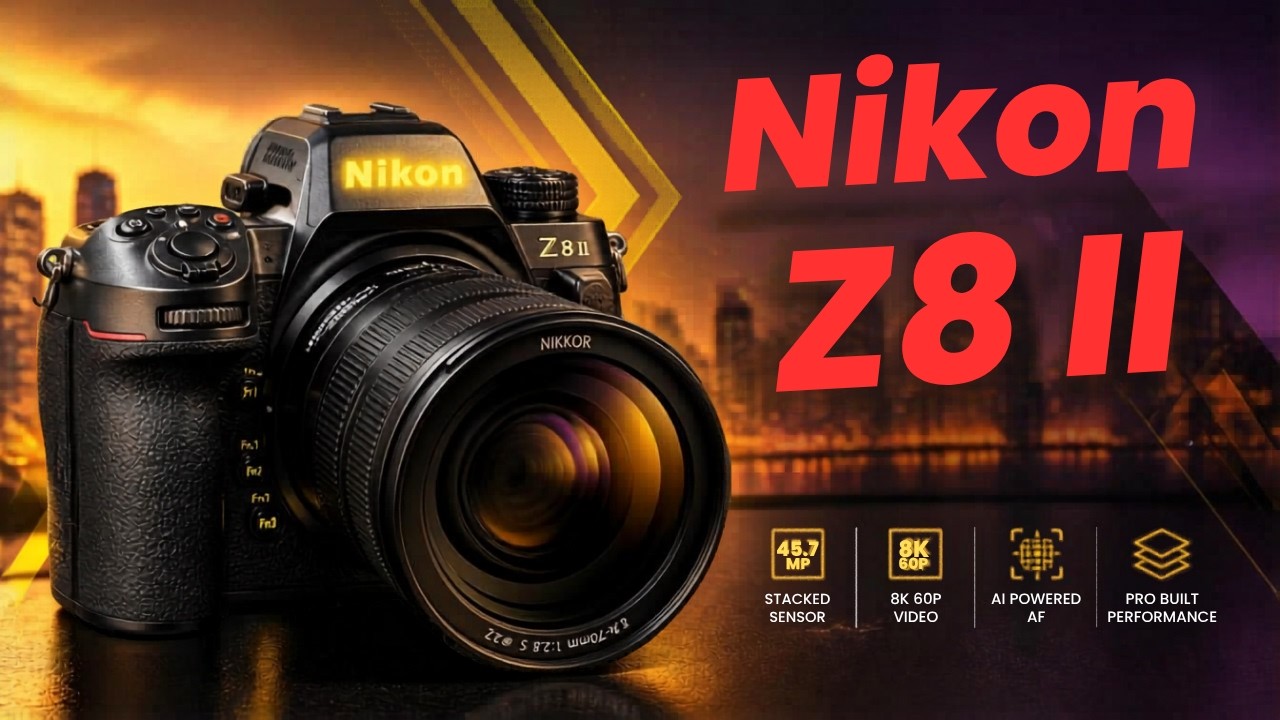
TL;DR
- The Nikon Z8 II is expected to bring meaningful upgrades over the original Z8, targeting professional hybrid shooters who need both stills and video performance in a compact body.
- Key anticipated changes include improved autofocus, higher-resolution video options, enhanced heat management, and refined ergonomics - all without ballooning the size or price of the original.
- For Dubai-based filmmakers and content creators, the Z8 II positions itself as a serious alternative to Sony's Alpha line and Canon's R5 series.
- Before committing to a purchase, renting the current Nikon Z8 is the smartest way to evaluate whether the upgrade cycle is worth it for your workflow.
- Explore Nikon Rental on LighRent to test Nikon's latest mirrorless lineup before you buy.
The rumor mills have been spinning for months, and if you follow mirrorless camera news closely, you already know that the Nikon Z8 II is one of the most anticipated camera releases in recent memory. The original Nikon Z8 arrived in 2023 as a genuinely impressive feat of engineering - a camera that packed most of the Z9's capabilities into a significantly smaller and lighter body, without a mechanical shutter, and at a price point that made professional hybrid shooters sit up and take notice. So the question on everyone's mind is simple: what is Nikon actually changing, and does it matter enough to upgrade?
Whether you are a cinematographer working on commercial projects across Dubai, a content creator building a social media presence, or a wedding videographer shooting across the UAE, the Z8 II could reshape how you approach your kit. The hybrid shooter market has never been more competitive, and Nikon is under real pressure to deliver something substantive rather than a spec-sheet refresh with a new number stamped on the body. In this breakdown, we cut through the noise and analyze what is realistically changing, what remains the same, and whether the Nikon Z8 II deserves a place in your bag.
If you are not ready to commit to a purchase - and honestly, you should not be until you have handled the camera yourself - LighRent, Dubai's peer-to-peer camera rental marketplace, gives you access to professional Nikon gear so you can make informed decisions backed by real-world experience. Let's get into it.
What Made the Original Nikon Z8 Special
Before we can appreciate what the Z8 II is changing, it is worth revisiting why the original Z8 earned so much praise in the first place. Nikon essentially distilled the Z9 - a flagship body that retails at a serious premium - into a camera that weighed around 820 grams with battery and card, featured a fully electronic shutter running at up to 20 frames per second, and delivered 8K RAW video internally. That combination was, at launch, virtually unmatched at its price bracket.
The Core Strengths Nikon Built On
The Z8's stacked BSI CMOS sensor was central to its appeal. The stacked architecture allowed for the kind of readout speeds that eliminated rolling shutter distortion in most shooting scenarios - a critical advantage for video work. Add in dual card slots (CFexpress Type B and SD UHS-II), 8K 60p RAW output, and subject recognition autofocus that tracked eyes, animals, vehicles, and aircraft, and you had a camera that genuinely erased the line between a stills camera and a cinema tool. For videographers browsing the Cameras for Hire section on LighRent, the Z8 consistently stands out as one of the most versatile hybrid options available in the UAE.
However, the Z8 was not without its criticisms. Overheating under sustained 8K recording, limited in-body image stabilization compared to some Sony competitors, a joystick placement that felt slightly awkward during vertical shooting, and the absence of a built-in cooling fan were all points raised by working professionals. The Z8 II, by most credible indications, is Nikon's direct response to that feedback.
What the Nikon Z8 II Is Realistically Changing
Based on patent filings, industry leaks, and Nikon's own trajectory with the Z9 Mark II (released under the model designation Z9 with ongoing firmware updates), several key areas of improvement are expected. It is worth noting that Nikon has a strong track record of delivering meaningful generational upgrades rather than cosmetic refreshes, which bodes well for what the Z8 II should deliver.
Autofocus System Refinements
Nikon's subject recognition autofocus in the Z8 was already excellent, but Sony's real-time tracking and Canon's Dual Pixel CMOS AF continue to push the benchmark higher. The Z8 II is widely expected to feature a more refined neural network processor that improves subject acquisition speed in low contrast situations and delivers more reliable eye tracking during fast-moving sequences. For documentary filmmakers shooting candid content in Dubai's fast-paced environments - from desert safaris to urban street shoots - this kind of improvement is not cosmetic. It is the difference between a keeper and a miss.
Thermal Management and Recording Limits
This is where the Z8 II conversation gets genuinely interesting. The original Z8's Achilles heel was heat. Sustained 8K recording in warm climates - and Dubai's summers are unforgiving - meant that some shooters encountered thermal throttling earlier than they would in cooler environments. Nikon is expected to introduce an improved thermal dissipation system, potentially incorporating a more sophisticated internal heat spreader design. Whether this translates into a fully unlimited recording limit at 8K remains to be confirmed, but even a meaningful extension of sustained recording time would be a significant quality-of-life improvement for filmmakers on long commercial shoots.
Sensor and Image Processing Updates
Expectations around a completely new sensor for the Z8 II are mixed. Some credible sources suggest Nikon may retain a refined version of the existing stacked BSI CMOS architecture rather than a ground-up redesign, focusing instead on a new EXPEED processor generation. A newer processor would mean faster readout, improved noise performance at high ISO, and potentially higher frame rates at certain resolutions. For sports photographers and wildlife shooters who rely on burst speed, even marginal improvements here are meaningful.
Ergonomic and Build Refinements
The Z8's grip was praised overall, but the joystick and button layout received mixed feedback from shooters who frequently switch between landscape and portrait orientation. Nikon is expected to refine the button placement, potentially adding a secondary control dial position that makes vertical shooting more intuitive without requiring a separate vertical grip. This kind of ergonomic refinement sounds minor on paper but makes a substantial difference over a twelve-hour commercial shoot day in Dubai's Media City or during a corporate event at the Dubai World Trade Centre.
"The best camera is the one you can use fluently without thinking about the tool - when ergonomics get out of the way, creativity takes over. Nikon understands this, and the Z8 II reportedly addresses the handful of workflow friction points that professionals flagged in the original body." - Professional cinematographer, Dubai
Nikon Z8 II vs. Nikon Z8 - Spec Comparison
While official specifications have not been fully confirmed at time of writing, here is a realistic comparison based on current knowledge and credible reporting. This table will be updated as official details emerge from Nikon's official website.
| Feature | Nikon Z8 (2023) | Nikon Z8 II (Expected) |
|---|---|---|
| Sensor | 45.7MP Stacked BSI CMOS | 45.7MP Stacked BSI CMOS (refined) |
| Processor | EXPEED 7 | EXPEED 8 (expected) |
| Max Video Resolution | 8K 60p RAW Internal | 8K 60p RAW + potential 4K 240p (rumored) |
| Autofocus | 493-point Phase Detect, Subject Recognition | Enhanced Neural Network AF, improved low-light tracking |
| IBIS | 6-axis, up to 6 stops | Up to 8 stops (expected) |
| Thermal Management | Limited sustained recording in heat | Improved heat dissipation system |
| Card Slots | CFexpress Type B + SD UHS-II | Dual CFexpress Type B (rumored) |
| Body Weight | ~820g (with battery and card) | Similar (marginal refinements expected) |
| Expected Price (UAE) | AED 18,000 - 20,000 at launch | AED 20,000 - 23,000 (estimated) |
Should You Rent Before You Buy the Z8 II?
This is the question that every serious photographer or filmmaker in the UAE should be asking themselves. Camera bodies at this tier represent a significant financial commitment - we are talking about AED 20,000 or more for a new body, before you factor in lenses, cards, and accessories. The Nikon Z-mount lens ecosystem is excellent, but it is not cheap, and committing to the platform requires confidence in the system as a whole.
Renting through Nikon Rental on LighRent gives you the opportunity to shoot with the current Z8 on a real project - not a test shoot in a living room, but an actual commercial, wedding, or content production. That real-world experience will tell you more about whether the Z8 ecosystem suits your workflow than any spec sheet or YouTube review ever could.
The Financial Case for Renting First
Consider the math. Renting a professional camera body for a weekend shoot in Dubai might cost a fraction of what the body itself costs to purchase outright. If you rent the Z8 three or four times over the course of a year while you evaluate the Z8 II release, you spend considerably less than if you had purchased the original Z8 and then felt the need to upgrade immediately upon the Z8 II's launch. Rental lets you access the best tools for each specific job without the sunk cost of ownership locking you into a particular body generation.
For filmmakers who want to pair the Z8 with smooth, cinematic movement, the DJI RS 5 Combo is available to rent on LighRent - pairing a Z8 or similar mirrorless body with a professional gimbal system is one of the fastest ways to evaluate whether a camera's erg