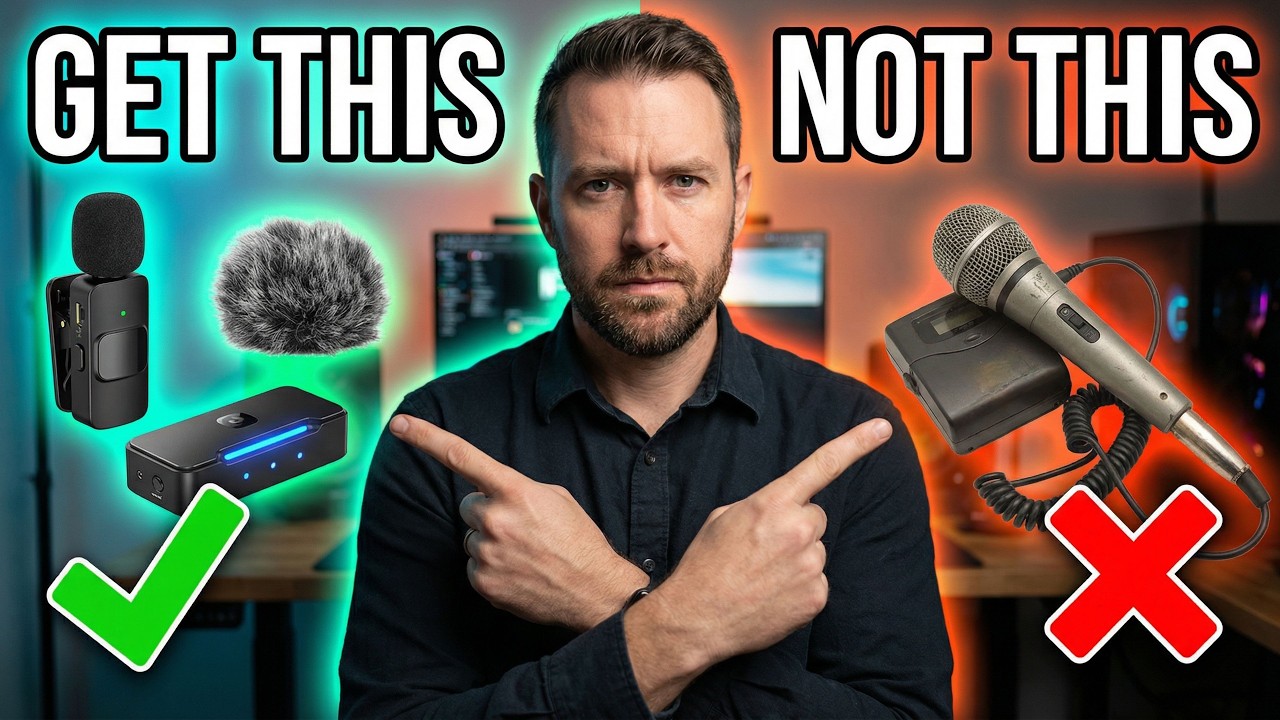
TL;DR
- The Sennheiser MKE 600, Rode Wireless Pro, and Sony ECM-W2BT dominate the wireless microphone market in 2026, offering professional-grade audio for filmmakers and content creators.
- Key factors include transmission range (100-200m), battery life (8-15 hours), and compatibility with your camera system.
- Renting wireless microphones before purchasing allows you to test different models and find the perfect match for your specific production needs.
- Professional wireless systems typically cost AED 920-800 to buy but can be rented for AED 90-80 per day, making high-end audio accessible for any budget.
- Consider browsing professional audio equipment to compare options from trusted rental partners across the UAE.
Wireless microphones have become indispensable tools for modern filmmakers, content creators, and audio professionals in 2026. Whether you're capturing intimate interviews, recording dynamic documentaries, or producing commercial content, the right wireless microphone system can elevate your audio quality from amateur to professional standards. With technological advances in digital transmission, extended battery life, and improved noise reduction, today's wireless microphones offer unprecedented reliability and crystal-clear sound quality.
The challenge lies in selecting the perfect system for your specific needs and budget. Professional-grade wireless microphones can represent a significant investment, often costing hundreds or thousands of dirhams. This is where LighRent's peer-to-peer rental marketplace proves invaluable, allowing you to test premium equipment before committing to a purchase, or simply rent what you need for specific projects without the upfront costs.
In this comprehensive guide, we'll explore the five best wireless microphones worth buying in 2026, examining their strengths, limitations, and ideal use cases. We'll also discuss when renting might be the smarter financial decision for your creative projects.
Understanding Wireless Microphone Technology in 2026
The wireless microphone landscape has evolved dramatically over the past few years, with manufacturers focusing on digital transmission protocols, extended range capabilities, and seamless integration with modern camera systems. Understanding these technological advances is crucial for making an informed purchasing decision.
Digital vs Analogue Transmission
Modern wireless microphones predominantly use digital transmission protocols, offering superior audio quality, reduced interference, and enhanced security compared to their analogue predecessors. Digital systems provide 24-bit/48kHz audio resolution as standard, ensuring broadcast-quality sound that matches the capabilities of today's 4K and 8K cameras for hire.
The key advantage of digital systems lies in their error correction capabilities and encrypted transmission, which virtually eliminates the hiss and dropouts that plagued older analogue systems. However, digital systems do introduce a slight latency (typically 2-4ms), which is negligible for most applications but worth considering for live performance scenarios.
Frequency Management and Legal Considerations
In the UAE, wireless microphones operate within specific frequency bands regulated by Ofcom. The most commonly used bands include the 863-865MHz range for licence-free operation and various UHF bands for licensed use. Professional systems often provide frequency agility, automatically scanning for clear channels and avoiding interference from other wireless devices.
When working on location, particularly in urban environments or venues with multiple wireless systems, frequency coordination becomes crucial. Many modern systems include smartphone apps that help identify clear frequencies and manage multiple channels simultaneously.
The Five Best Wireless Microphones Worth Buying in 2026
1. Sennheiser EW-DX Series
Sennheiser's EW-DX series represents the pinnacle of wireless microphone technology, offering professional-grade performance with intuitive operation. The system features automatic frequency management, high-resolution 24-bit/48kHz audio, and an impressive transmission range of up to 100 metres in optimal conditions.
The EW-DX receiver includes a stunning OLED display with real-time RF spectrum analysis, allowing operators to visualise frequency usage and identify potential interference sources. The bodypack transmitter boasts up to 12 hours of battery life with rechargeable Li-ion batteries, making it ideal for long-form documentary work or event coverage.
Key specifications include 134MHz switching bandwidth, 3456 tunable frequencies, and compatibility with a wide range of Sennheiser capsules. The system's build quality is exceptional, with robust metal construction designed to withstand the rigours of professional production environments.
2. Rode Wireless Pro
Rode's Wireless Pro system has gained significant traction among content creators and independent filmmakers, offering professional features at a more accessible price point. The system includes two transmitters and one receiver, making it perfect for interview setups or dual-presenter scenarios.
One standout feature is the built-in recording capability, with each transmitter including 32GB of internal memory for backup recording. This redundancy proves invaluable when working in challenging RF environments or during critical interviews where audio failure isn't an option.
The system operates in the 2.4GHz band, providing licence-free operation worldwide. While this frequency band can be more congested than UHF alternatives, Rode's proprietary Series IV digital transmission protocol includes intelligent frequency hopping to maintain reliable connectivity.
"The democratisation of professional audio equipment has been remarkable. Systems that would have cost tens of thousands just a decade ago are now accessible to independent creators, fundamentally changing how we approach audio capture in documentary and commercial work." - James Morrison, Senior Sound Engineer at Pinewood Studios
3. Sony ECM-W2BT Wireless Microphone
Sony's ECM-W2BT represents excellent value for money, particularly for content creators working primarily with Sony camera systems. The system offers seamless integration with Sony's FX and Alpha camera lines, providing automatic level control and digital audio transmission.
The transmitter features a unique magnetic mounting system, allowing for discreet placement on talent without traditional clip-on mechanisms. Battery life extends to 9 hours of continuous use, with USB-C charging for convenient power management.
While the transmission range is more modest at 60 metres, the system excels in controlled environments such as studios or indoor interview setups. The receiver connects directly to Sony cameras via the Multi Interface Shoe, eliminating cables and reducing setup complexity.
4. Audio-Technica System 10 PRO
Audio-Technica's System 10 PRO operates in the 2.4GHz band but distinguishes itself through superior build quality and exceptional audio fidelity. The system includes advanced diversity reception technology, utilising multiple antennas to maintain signal integrity even in challenging environments.
The bodypack transmitter features a robust aluminium construction with a clear LCD display showing battery status, frequency information, and audio levels. The system's 24-bit/48kHz digital transmission ensures pristine audio quality, while the included AT899 subminiature condenser microphone delivers broadcast-quality voice reproduction.
Battery performance is outstanding, with the system achieving up to 10 hours of continuous operation using standard AA batteries. This makes it particularly suitable for extended location shoots where access to charging facilities may be limited.
5. Shure SLXD Series
Shure's SLXD series continues the company's legacy of reliable, professional-grade wireless systems. Operating in the UHF band, the system offers 44MHz of switching bandwidth and includes Shure's proprietary frequency diversity technology for enhanced signal reliability.
The receiver features dual-antenna diversity and automatic frequency selection, making it suitable for users who prefer plug-and-play operation without extensive RF coordination. The system's audio quality is exceptional, with a dynamic range exceeding 120dB and minimal latency.
Build quality is exemplary, with both transmitter and receiver featuring robust metal construction designed for touring and broadcast applications. The system includes comprehensive metering and monitoring capabilities, making it suitable for both studio and location work.
Comparing Rental vs Purchase Decisions
The decision between renting and purchasing wireless microphones depends on several factors, including usage frequency, budget constraints, and the need for different systems across various projects. Professional wireless microphone systems represent a significant investment, with prices ranging from AED 2,300 for entry-level systems to over AED 13,800 for top-tier professional units.
| Model | Purchase Price | Daily Rental Rate | Weekly Rental | Break-even Point |
|---|---|---|---|---|
| Sennheiser EW-DX | AED 10,100 | AED 340 | AED 970 | 29 days |
| Rode Wireless Pro | AED 3,450 | AED 160 | AED 450 | 21 days |
| Sony ECM-W2BT | AED 2,050 | AED 110 | AED 320 | 18 days |
| Audio-Technica System 10 PRO | AED 3,900 | AED 180 | AED 520 | 21 days |
| Shure SLXD | AED 8,300 | AED 300 | AED 840 | 28 days |
When Renting Makes Financial Sense
Renting wireless microphones through platforms like LighRent offers several advantages beyond simple cost savings. For filmmakers working on diverse projects, access to different microphone systems allows for optimal equipment selection based on specific requirements rather than being limited to a single purchased system.
Project-based rentals also eliminate concerns about equipment maintenance, insurance, and technological obsolescence. Professional audio equipment requires regular calibration and servicing, costs that are absorbed by the rental provider rather than the end user.
For location shoots requiring multiple channels or backup systems, rental costs scale more favourably than purchasing multiple units. A typical interview setup might require two to four wireless channels, representing an investment of AED 9,200-8000 when purchasing, compared to AED 690-300 for a week's rental.
Building Long-term Equipment Strategies
Many professional filmmakers and production companies adopt hybrid approaches, owning basic wireless systems for regular use while renting specialised or additional units for specific projects. This strategy provides operational flexibility while managing capital expenditure effectively.
When considering purchase decisions, factor in the rapid pace of technological advancement in wireless audio. Systems purchased today may become obsolete within 5-7 years, making rental an attractive option for accessing cutting-edge technology without depreciation concerns.
Technical Considerations and Best Practices
Selecting the optimal wireless microphone system requires careful consideration of technical specifications, operational requirements, and environmental factors. Understanding these parameters ensures reliable performance across diverse shooting scenarios.
RF Environment Analysis
Before deploying wireless microphones, conduct thorough RF environment analysis using spectrum analyser apps or dedicated equipment. Urban environments present particular challenges, with potential interference from Wi-Fi networks, mobile phones, and other wireless devices operating in similar frequency bands.
The 2.4GHz band, used by many consumer-oriented systems, shares spectrum with Wi-Fi, Bluetooth, and various industrial devices. While modern systems include frequency agility and error correction, UHF systems operating in less congested bands often provide more reliable performance in challenging environments.
Professional productions benefit from dedicated RF coordination, particularly when working alongside other wireless systems such as IFB (interruptible foldback) communications, wireless video transmission, or other wireless micro